Lifetime Deal: What It Is and How Founders Run One
What a lifetime deal is, when a founder should sell one, how to price it against churn, where to list it and how buyers spot a deal that lasts.
A lifetime deal (LTD) is a one-time payment that gives a customer access to a software product for as long as the product exists, instead of a monthly or yearly subscription. Founders sell lifetime deals to raise cash and win early users fast; buyers take them to stop paying every month. The catch for founders is the revenue ceiling: one payment has to cover years of hosting and support.
If you want to sell one without giving most of the revenue away, you can publish it on the Microlaunch deals marketplace next to a launch. Microlaunch reports 650,000+ unique visitors in total and 30k+ a month, so the deal reaches founders and early adopters who are already looking for new tools.
How a lifetime deal works
A lifetime deal trades future subscription revenue for cash today. The buyer pays once; you keep serving them for years. Whether that's a good trade depends on two numbers: what the deal is worth in months of subscription, and how long the customer would have stayed anyway.
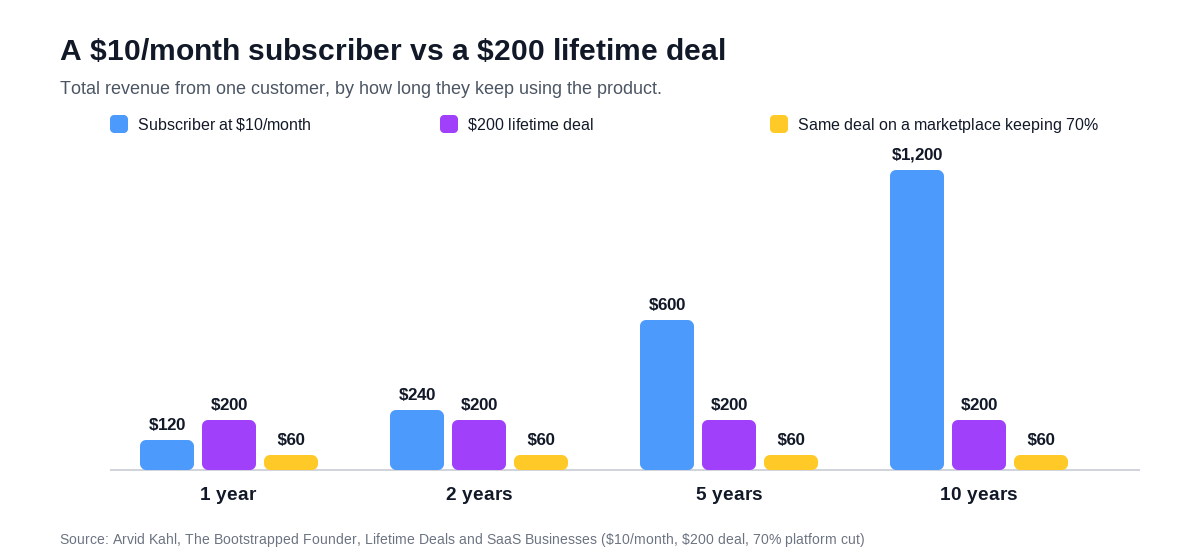
Arvid Kahl's example shows the trap. A product costs $10 a month, the founder expects lifetime customers to stay two years and prices the deal at $200. If those customers use it for a decade, the founder pays for eight years of their usage out of pocket. Sold through a marketplace that keeps 70%, the same $200 deal nets $60.
Lifetime pricing isn't only a startup trick. RevenueCat's State of Subscription Apps 2026, built on 115,000+ apps, found that one in four apps offer a lifetime plan: 23.2% sell subscriptions plus lifetime, against 63.5% that sell subscriptions only. Photo & Video apps lead at 33.0%, while Business apps stay among the purest subscription categories at 76.5% subscriptions only, because per-user costs keep running.
Should you sell a lifetime deal?
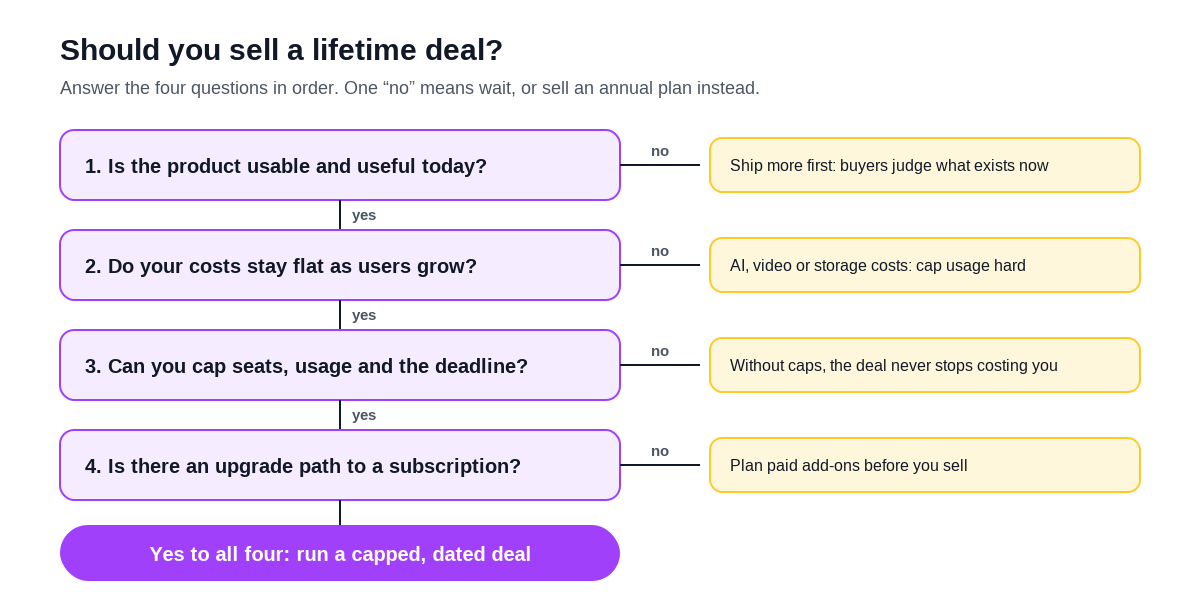
A lifetime deal makes sense when you need cash and users more than predictable revenue, and when each extra user costs you almost nothing. It is a poor fit when every user adds real costs (AI, video, storage) or when you already have steady subscribers.
| Good reasons | Bad reasons |
|---|---|
| Cash for runway without raising money | Covering a product that isn't usable yet |
| First users who give feedback and catch bugs | Hiding weak subscription demand |
| Reviews and social proof for the launch | Running a "lifetime" sale with no end date |
| A test of willingness to pay | Products whose costs grow with each user |
Founder stories show both sides:
- The win: after selling $500k of lifetime deals, LeadDelta's founder built recurring revenue to $25k a month and raised $800k in seed funding, as he told Indie Hackers.
- The ceiling: Damon Chen offered a lifetime deal with his Product Hunt launch and made $5,124 in 10 days, then cancelled it because video hosting costs add up. A month and a half later he had 29 subscribers and about $500 MRR, which he called "10X harder than selling LTD" on Indie Hackers.
- The mix: Praveen Pendyala's deal for his transcription app ran 15 months and brought in over $400,000 in gross sales, with a 35% refund rate and 2.5% of lifetime buyers converting to subscriptions, per his write-up.
Before you commit, our product feedback guide helps you check that the product is ready for a crowd of demanding first users.
How to price a lifetime deal
Price a lifetime deal from churn, not from what feels like a bargain. A subscriber who leaves after 24 months pays 24 times the monthly fee; a lifetime buyer who stays for 5 years pays once.
CRV's 2026 churn benchmarks put monthly logo churn for SMB customers on $500 to $5,000 contracts at around 4.1%, or roughly 39% a year. At that rate the average customer stays about 24 months, so a $10 a month SMB customer pays about $244 in total.
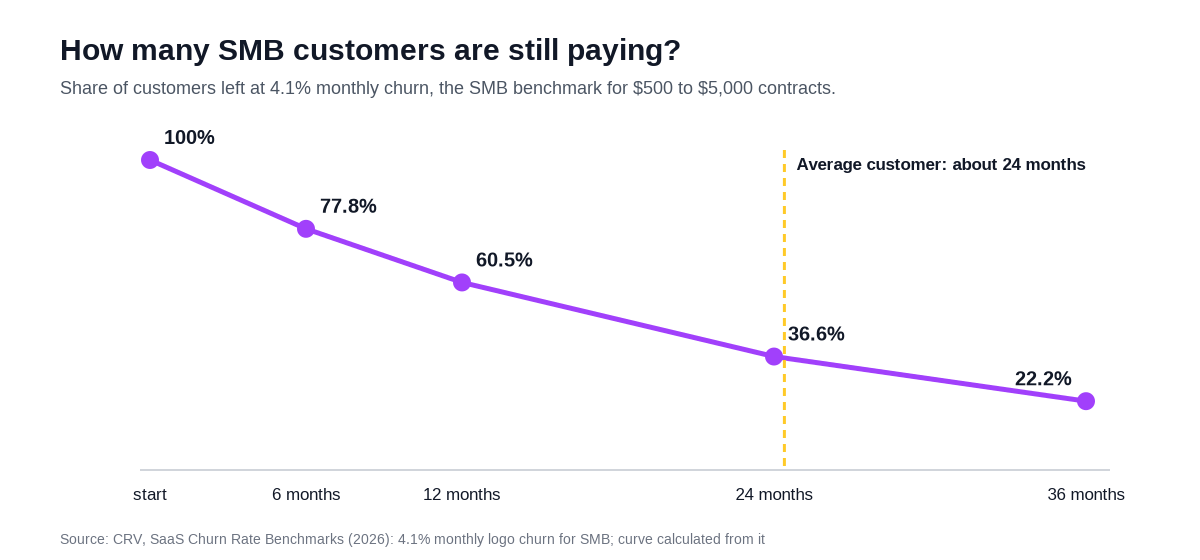
That gives a simple pricing frame:
- Start from your monthly price. Arvid Kahl's rule of thumb: for a 12-month runway, price the deal at 14-16 times the monthly fee ($140-$160 for a $10 plan).
- Check it against customer lifetime. If your customers stay about 24 months, a deal far below 24 times the monthly fee pays for less than an average subscriber would.
- Subtract the platform cut. A deal that keeps 30% of the sale has to be priced, or capped, with that in mind.
- Cap what "lifetime" includes. Set seat and usage limits, and keep new features behind an upgrade.
- Cap the number of deals. A fixed number of lifetime accounts limits the cost you carry for years.
Our AppSumo alternatives guide compares the deal marketplaces themselves, if you want to see where each one fits.
Where to sell a lifetime deal
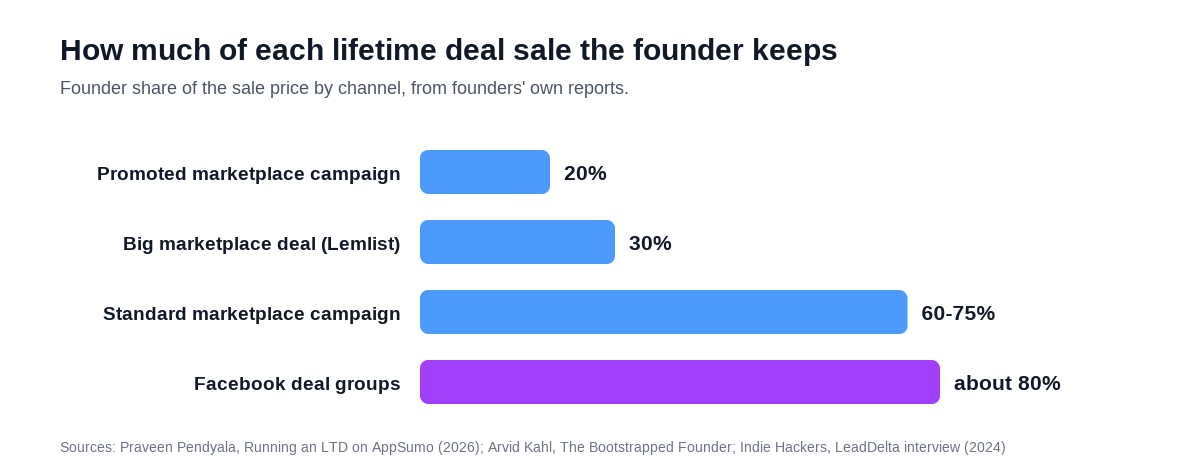
The channel decides how much of each sale you keep. Founders report keeping 20% on a heavily promoted marketplace campaign and 30% on a big marketplace deal (Lemlist kept 30% of $161,896 after two weeks and then had over 3000 customers to serve for life). A standard marketplace campaign pays 60-75%, and Facebook deal groups take a kickback of about 20%.
| Channel | What you get | Pick it if |
|---|---|---|
| Microlaunch deals + launch | A deal page in the deals marketplace, plus a launch with 30 days of exposure, reviews and roasts | You want buyers who come for new tools, and a launch that keeps your product visible for a month |
| Product Hunt launch with a deal | One launch day on the leaderboards | You can rally a crowd for a single day |
| AppSumo | The largest lifetime deal buyer base | You can serve thousands of buyers and give up most of each sale |
| Facebook deal groups | Direct access to lifetime deal hunters | You already know the group owners |
| Your own site and email list | Full control of terms, caps and the deadline | You already have an audience |
| Founder communities like r/microlaunch | Early adopters who give feedback | You want feedback first and sales second |
Launch on both: Product Hunt brings a one-day burst, Microlaunch keeps the deal and the product in front of readers for 30 days. Our Product Hunt alternatives guide lists more launch sites.
Selling a lifetime deal on Microlaunch
A Microlaunch launch and deal go out together, so the first users who discover your product can buy it on the spot. Four features do the work:
- A launch with 30 days of exposure, used by 1800+ startups and founders, instead of a single launch day.
- A deal in the marketplace: the deals page lists founder-built products, exclusive offers and lifetime deals from its community, and Top Deals on the homepage show discounts and Lifetime tags.
- Reviews and roasts: honest feedback and testimonials from makers, which buyers read before they pay.
- Reach that lasts: 7.2M+ product impressions and 140,000+ product clicks so far, plus r/microlaunch, where 6,000+ founders share launches.
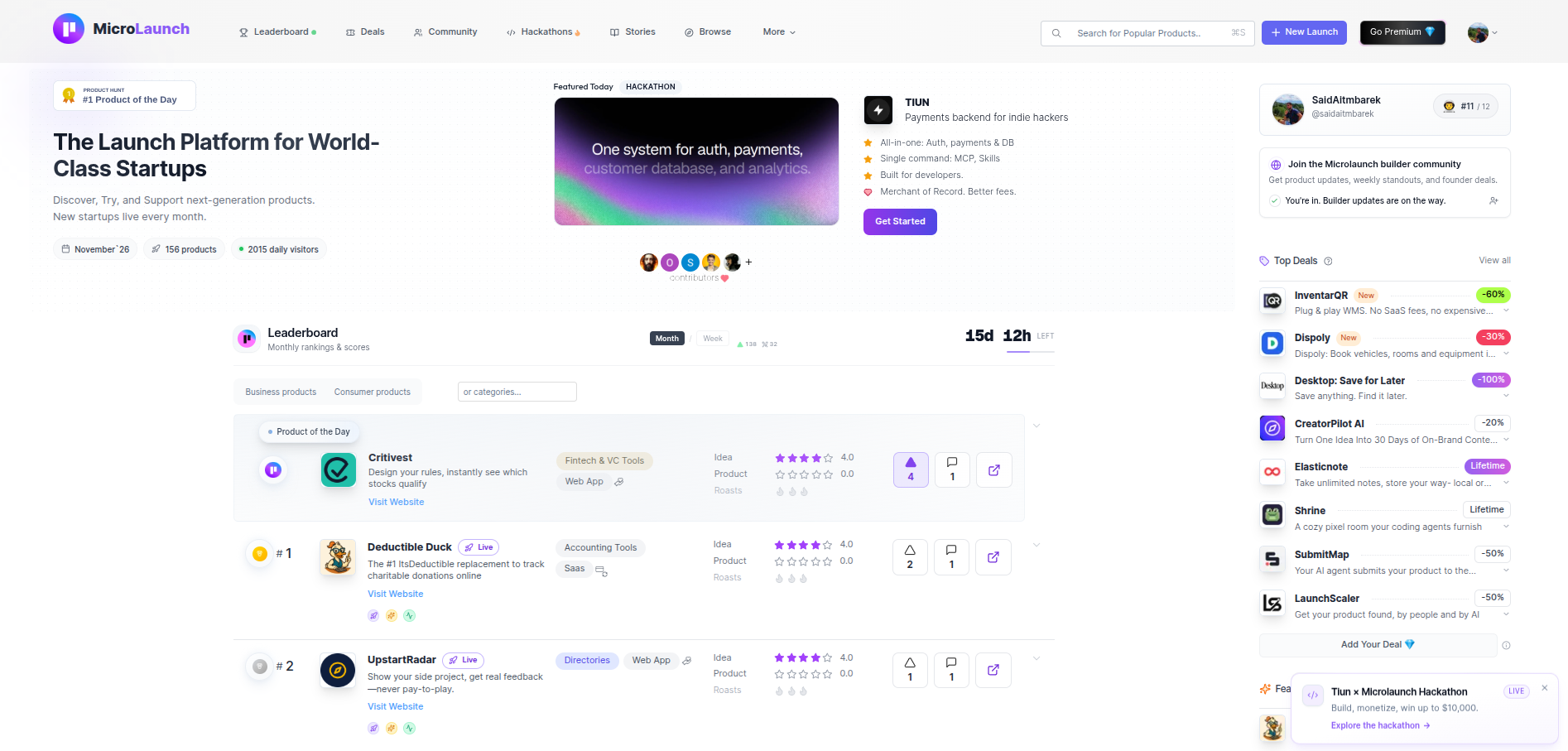

Step 4 of a Premium launch is selling: Launch Pro unlocks more reach and lets you publish your deals. For the launch itself, our product launch guide covers what to prepare.
How to run a lifetime deal, week by week
A lifetime deal works best as a short, dated campaign, not a permanent price. Founders who did well set a deadline and kept it.
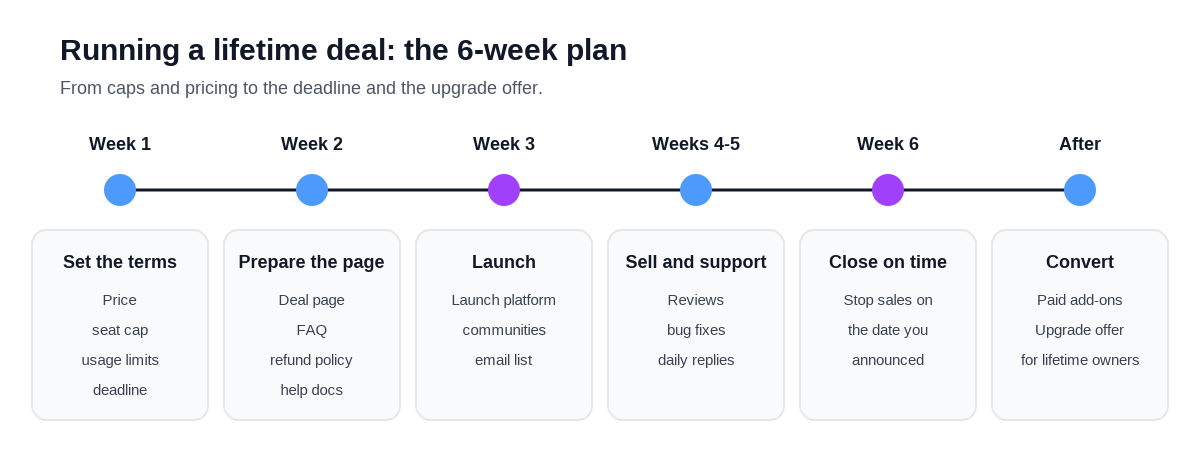
- Set the terms (week 1). Price, seat cap, usage limits and the end date, written down before you sell.
- Prepare the page (week 2). A deal page, an FAQ, a refund policy and help docs for the questions every buyer asks.
- Launch (week 3). A launch platform, communities and your email list on the same day. Our user acquisition guide shows how these channels fit together.
- Sell and support (weeks 4-5). Reply every day, collect reviews and fix bugs fast. Lifetime buyers tend to be heavy users who catch bugs before your subscribers do.
- Close on time (week 6). Stop sales on the date you announced. A "lifetime" deal that never ends trains buyers to wait.
- Convert lifetime owners. Keep new value behind a subscription upgrade. HeySummit converted 35% of its lifetime customers into monthly payers with a reduced-price plan for lifetime owners.
FeedBear's founder adds one warning: most lifetime buyers are not your long-term customers, so weigh their feature requests against what paying subscribers need.
For buyers: how to spot a lifetime deal that lasts
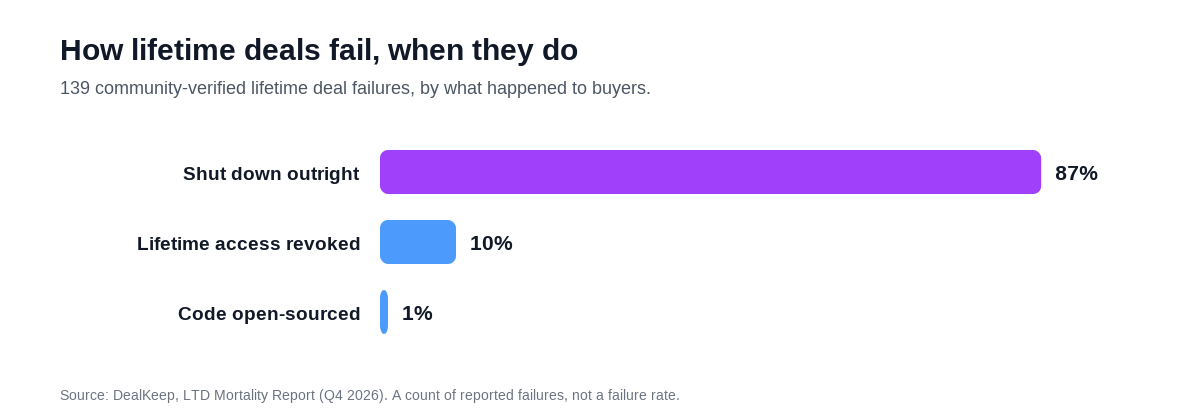
A lifetime deal lasts as long as the company behind it, not as long as you. Nobody publishes a true failure rate, because marketplaces don't release how many deals they sold. The DealKeep LTD Mortality Report shows how deals fail once they do: of 139 community-verified failures, 87% shut down outright, 10% had lifetime access revoked by a company still trading, and 1% were open-sourced.
Check these before you pay:
- A real product today, not a roadmap. Buy what exists.
- Written limits: seats, usage, and which future features are included.
- A business model beyond the deal: paid plans that real customers pay for every month.
- A data export, so you keep your work if the product closes.
- Reviews from actual users, like the ones founders collect on a beta testers round or a launch.
Selling a lifetime deal? Publish it on Microlaunch and launch on the same day, so the people who discover your product can buy it while the launch is live.
Frequently asked questions
What is a lifetime deal?
A lifetime deal is a one-time payment for permanent access to a software product, instead of a subscription. "Lifetime" means the lifetime of the product, so access ends if the company shuts down or changes its terms.
Are lifetime deals good for SaaS founders?
Lifetime deals are good for early cash, first users and feedback, and risky for long-term revenue. They work best capped, dated and priced against how long your subscribers stay, followed by an upgrade path to a subscription.
How much should a lifetime deal cost?
Price a lifetime deal at a multiple of the monthly fee that covers how long a customer would stay. Arvid Kahl suggests 14-16 times the monthly fee for a 12-month runway; with SMB churn near 4.1% a month, customers stay about 24 months.
Can you convert lifetime deal buyers into subscribers?
Some lifetime buyers do convert to subscribers. HeySummit converted 35% with a reduced-price plan for lifetime owners; Praveen Pendyala converted 2.5% by keeping new features behind a subscription upgrade.
Where can I list a lifetime deal?
You can list a lifetime deal on a launch platform with a deals marketplace, on lifetime deal marketplaces, in Facebook deal groups, in communities or on your own site. The channel decides how much of each sale you keep, from 20% to the full price.