Do-Follow Backlinks: How Startups Get Them Safely
What do-follow backlinks are, how to check one, and 6 safe ways a new startup or SaaS can earn them without buying links or risking a Google penalty.
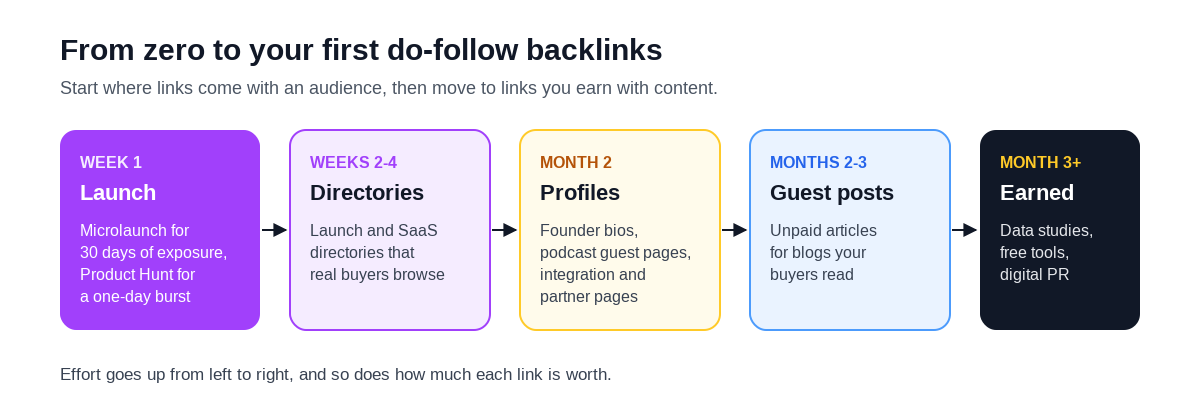
Do-follow backlinks are regular links from another site to yours, with no nofollow, sponsored or ugc attribute. Google can follow them and count them as a vote for your pages. For a new startup, they are how Google discovers the site and starts to trust it. The safest first do-follow backlinks come with an audience attached:
- A launch: Microlaunch gives each launched product a page with DR65+ do-follow backlinks, in front of 650,000+ unique visitors so far and 30k+ a month.
- Real directories: launch and SaaS directories that buyers actually browse.
- Content people want to cite: guest articles, data and free tools.
This guide covers what counts as do-follow, how to check any link in 30 seconds, and a six-step path from zero links to the ones that move rankings.
What is a do-follow backlink?
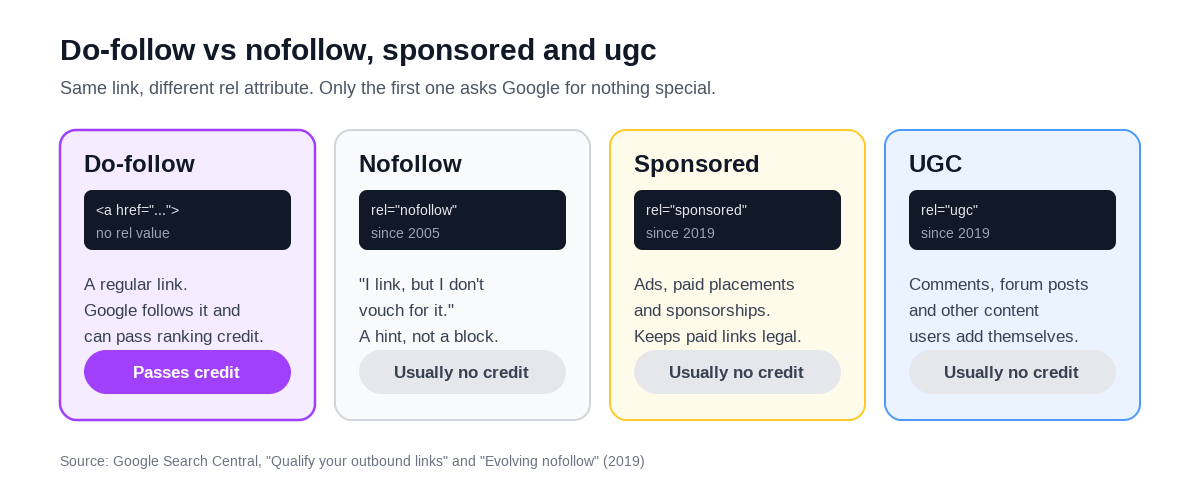
A do-follow backlink is any link without a rel value that tells Google to hold back. Google's documentation says regular links need no attribute at all; the three qualifiers are the exceptions:
rel="nofollow": the linking site doesn't want to vouch for the page.rel="sponsored": ads, paid placements and sponsorships.rel="ugc": comments, forum posts and other user-generated content.
Links with these values "will generally not be followed", according to Google's guide to qualifying outbound links. A do-follow link is simply the default.
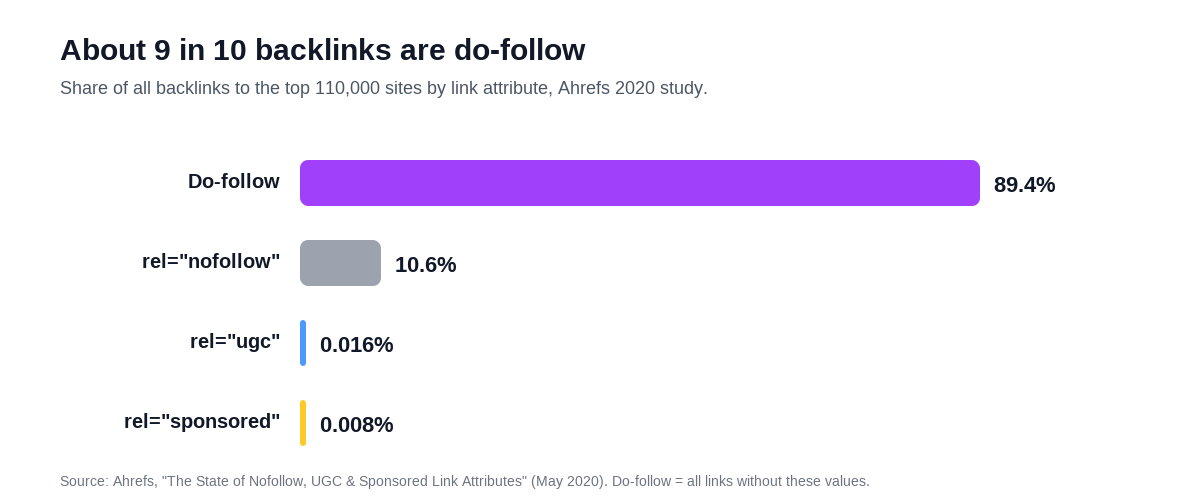
Most of the web still links the normal way. An Ahrefs study of the top 110k sites found that 10.6% of their backlinks were nofollow, while ugc appeared on only 0.016% and sponsored on 0.008%. Big publishers are the exception: Wikipedia, Forbes, Entrepreneur and CNN mark most outbound links nofollow, so a mention there brings readers more than ranking credit.
Why do-follow backlinks matter for a new startup
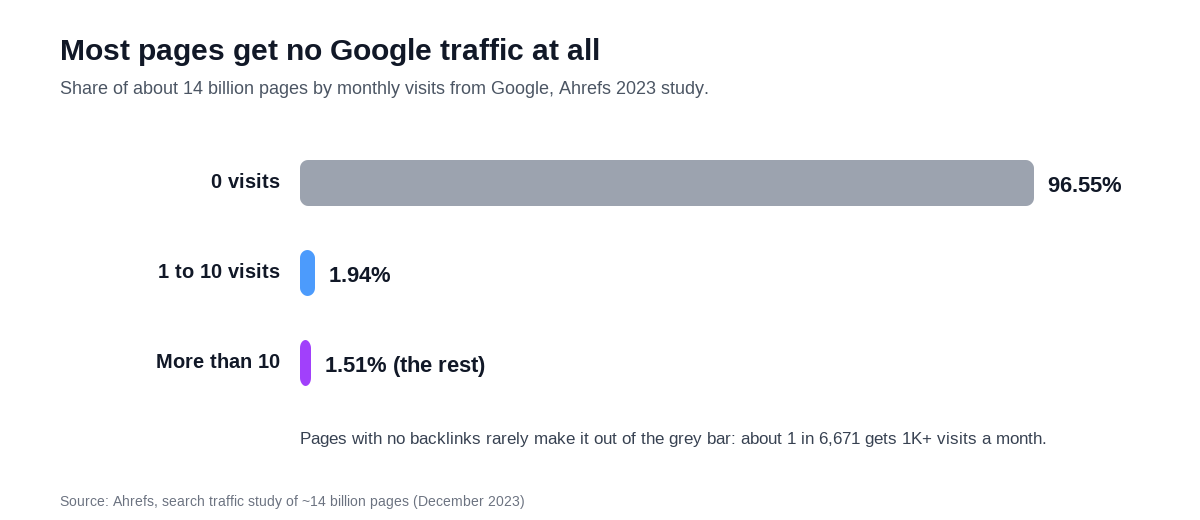
Do-follow backlinks are how Google finds and ranks a new site. Google discovers new pages by following links from pages it already knows, as Google Search Central explains. Without links, a new site is invisible. Ahrefs' study of about 14 billion pages found that 96.55% get no Google traffic at all. Only about 1 in 6,671 pages with no referring domains gets more than 1K search visits a month.
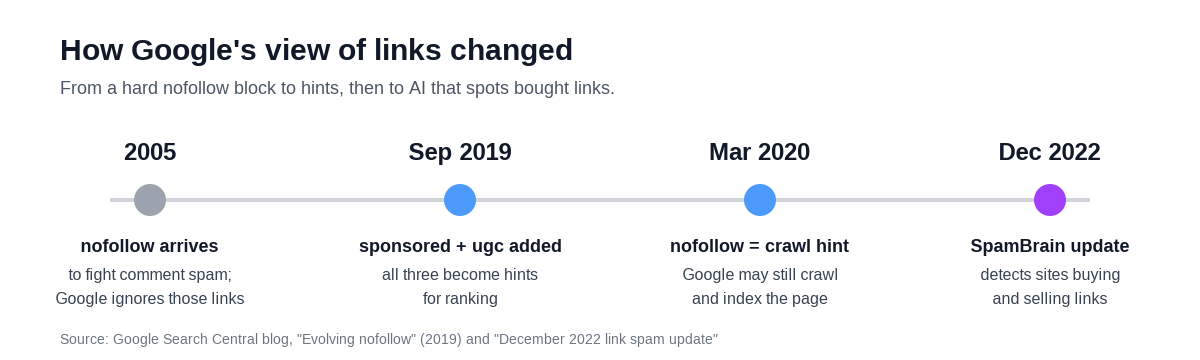
Nofollow links still help. Since 2019, Google treats nofollow as a hint rather than a hard block, and a nofollowed mention on a busy site can send buyers and lead to do-follow links later. A healthy profile has both; do-follow links are the ones that build authority.
Where startups get do-follow backlinks: 6 ways compared
The best do-follow backlinks for a startup come from places your buyers already visit. They differ in effort and in what you get besides the link.
| Method | Time to first link | What you get besides the link | Pick it if |
|---|---|---|---|
| Launch on Microlaunch | Launch day | 30 days of exposure, reviews, roasts and a deals spot | You want users and a lasting product page, not only a link |
| Launch and SaaS directories | Days to weeks | Listings buyers browse and compare | You want a base of relevant listings quickly |
| Founder and partner profiles | Weeks | Podcast pages, integration listings, bios | You have partners, integrations or interviews |
| Guest articles | 1-2 months | A byline in front of an industry audience | You can write well about your niche |
| Data studies and free tools | 2-3 months | Citations from journalists and bloggers | You have data or can build a small tool |
| Communities | Ongoing | Conversations with buyers (links are mostly ugc) | You want feedback more than link equity |
1. Launch on Microlaunch (and Product Hunt)
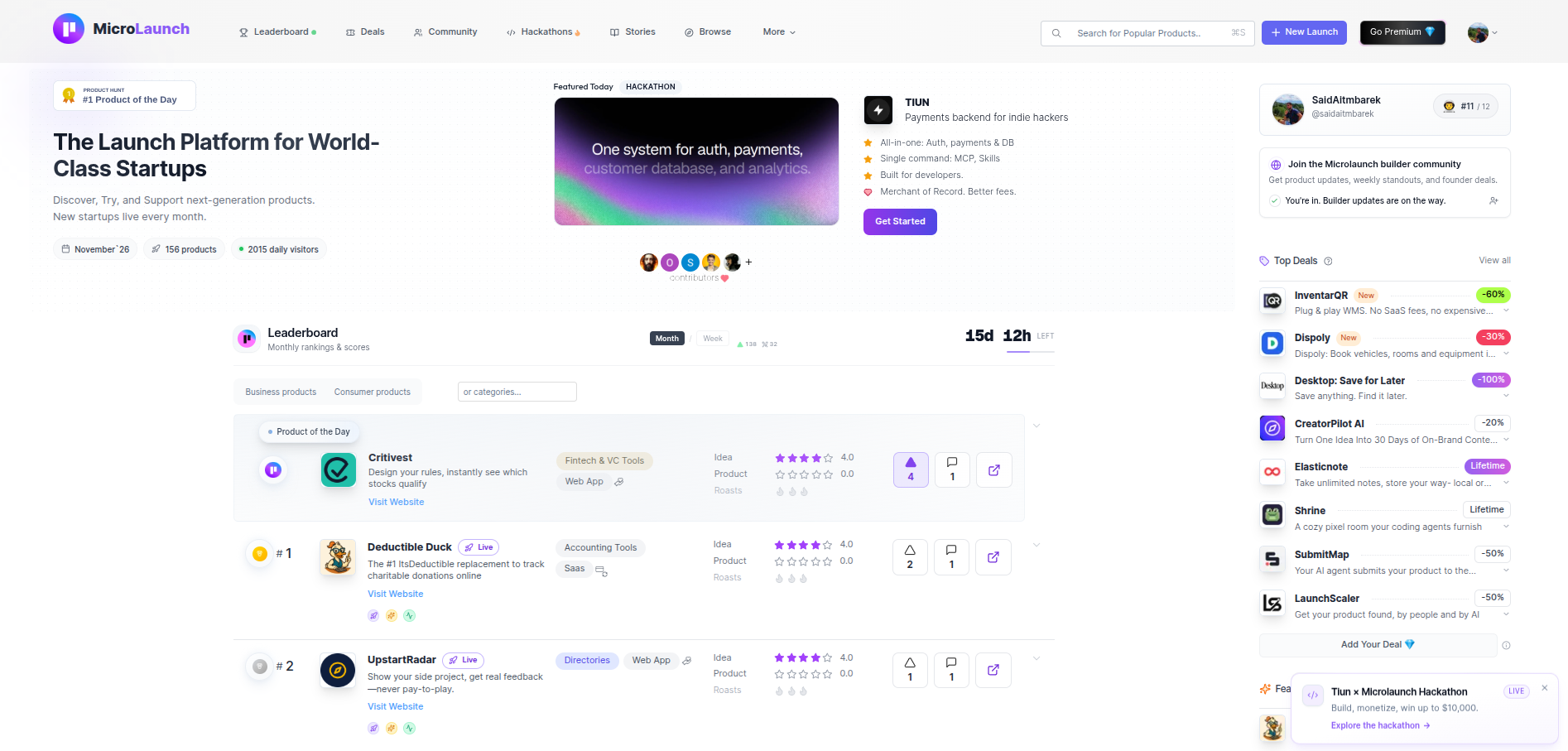
What it is: Microlaunch is the launch platform where startups launch, get 30 days of exposure, collect feedback and roasts, and publish deals. It reports 650,000+ unique visitors in total, 30k+ a month, 7.2M+ product impressions and 140,000+ product clicks, and its subreddit, r/microlaunch, has 6,000+ founders.
What helps with backlinks:
- A product page with DR65+ do-follow backlinks that stays live after launch day, part of the Launch Pro pack's lifetime SEO.
- Auto distribution to 4+ SEO-optimized pages, so the product shows up in more than one place on the site.
- Verified reviews and a badge that new visitors can see on the product page.
- A marketplace spot to publish a deal for founders.
What you pay for is the launch and its audience; the page and its link come with it. One founder, Nathan Chua of Snipowl, says 14.5% of his traffic came from Microlaunch.
Why use it with Product Hunt: Product Hunt gives one launch day on its leaderboards and a newsletter with 350K+ subscribers. Microlaunch keeps the product in front of readers for 30 days. Launch on both: the burst brings attention, and the 30 days keep bringing visitors.
Our Product Hunt alternatives guide lists more launch sites, and the product launch guide covers what to prepare before launch day.
2. Launch and SaaS directories
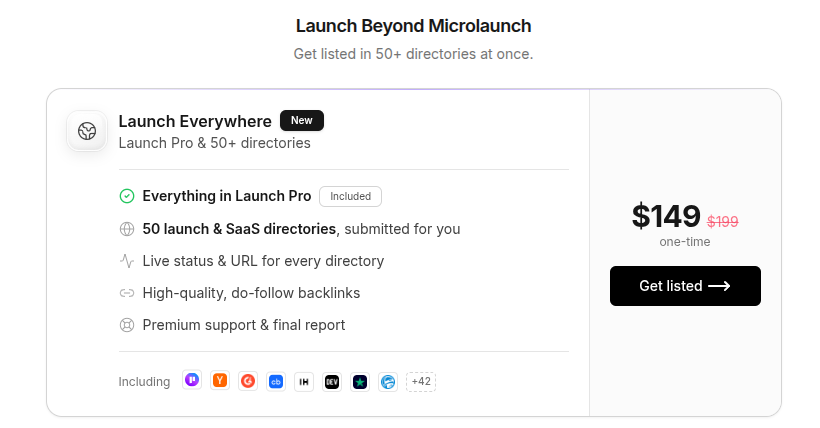
Directory listings are often a startup's first do-follow links, but only real directories help. Google's spam policies name "low-quality directory or bookmark site links" as link spam, so pick directories with their own traffic, editors and a niche that matches yours. Launch Everywhere adds 50 launch and SaaS directories to a Microlaunch launch, submitted for you, with a live status and URL for every listing and a final report.
Our directory submission service guide explains how to pick directories and what to ask a service for.
3. Founder and partner profiles
Profile links come from relationships you already have. Ask every integration partner for a listing on their integrations page. Ask podcast hosts to link your site on the episode page. Keep founder bios on conference and community sites up to date. Each is a page about you, on a site in your industry, and most of these links are regular do-follow links.
4. Guest articles
A guest article earns a do-follow link when the blog accepts it on merit, not for money. Pitch blogs your buyers read with one specific idea, and write something better than their usual post. Link your site once, in the bio or where it truly helps the reader. Google's link spam policy covers guest posts with keyword-stuffed anchors, so keep the anchor plain: your brand name or the page title.
5. Data studies and free tools
Original data earns the strongest do-follow links because writers need a source to cite. A small survey of your users, numbers from your own product, or a free calculator people bookmark gives journalists and bloggers a reason to link. This guide itself cites Ahrefs and Google for the same reason.
6. Communities
Community links rarely pass ranking credit, since forums mark most of them ugc or nofollow. Reddit, Indie Hackers and Slack groups are still worth the time for feedback and first users; our user acquisition guide shows how they fit next to launches and SEO.
How to check if a backlink is do-follow
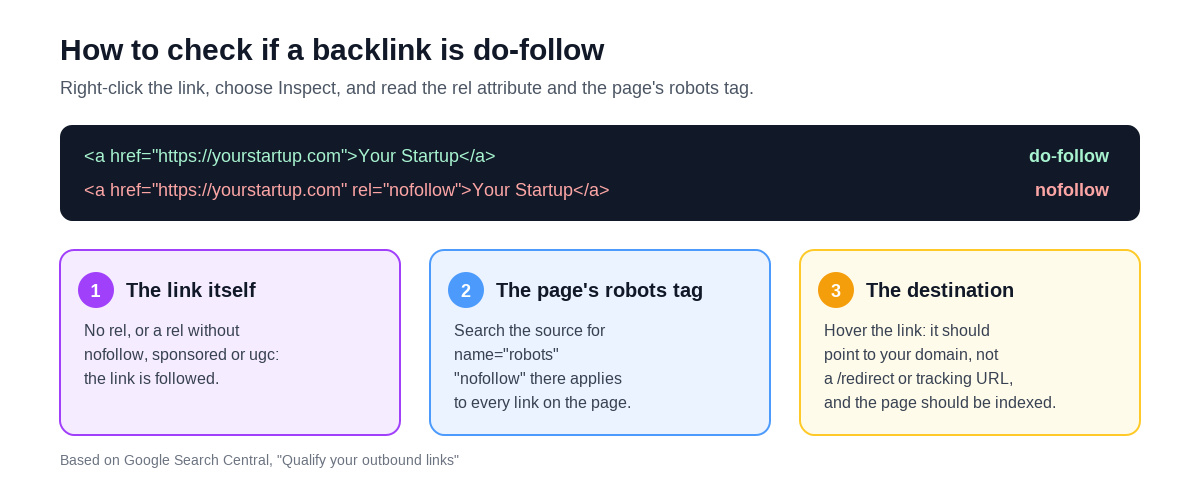
Checking a link takes about 30 seconds in any browser. Right-click the link, choose Inspect, and read the <a> tag:
- The link itself. No
rel, or arelwithoutnofollow,sponsoredorugc(for examplerel="noopener"), means the link is followed. - The page's robots tag. Search the page source for
name="robots". Anofollowthere applies to every link on the page, since Google also accepts nofollow as a robots meta tag. - The destination. Hover the link: it should point to your domain, not to a redirect or tracking URL. The page itself should be indexed (search
site:plus the page address).
Why buying do-follow backlinks is a bad deal
Buying a do-follow link to boost rankings breaks Google's spam policies. The policy lists money, goods or services exchanged for links, link exchanges, automated link programs and paid guest posts with followed links as link spam. Paid links are allowed only with rel="sponsored" or rel="nofollow", which removes the ranking credit buyers wanted.
Detection keeps improving. Since the December 2022 link spam update, Google's AI system SpamBrain detects both sites buying links and sites that pass outgoing links, and the credit from those links is lost.
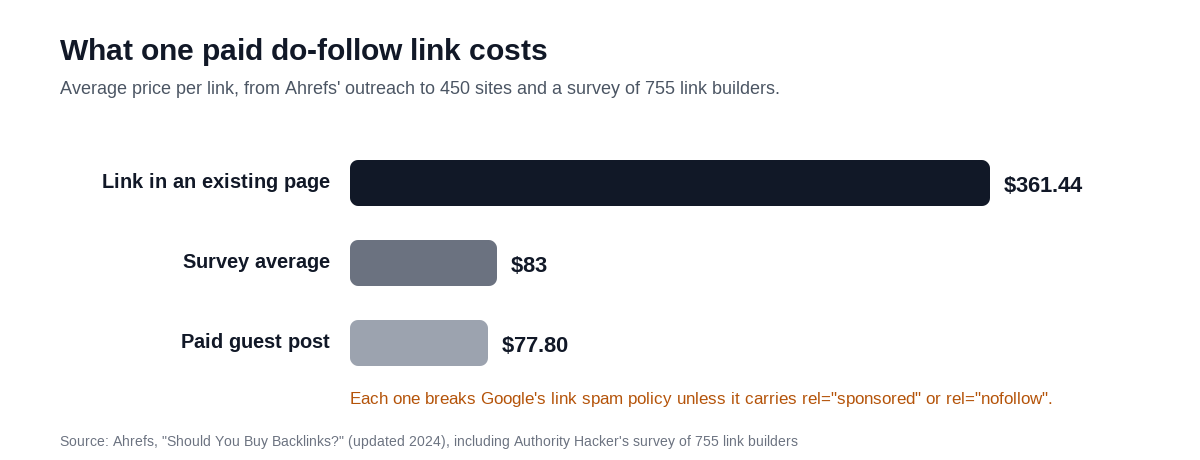
Paid links are also expensive. In Ahrefs' research on buying backlinks, a survey of 755 link builders put the average paid link at $83, and 74.3% of them admitted buying links. When Ahrefs contacted 450 sites, 12.6% agreed to sell a link, at $361.44 on average for a link in an existing page; paid guest posts averaged $77.80. Ahrefs' own advice is not to buy them.
If you'd rather hand the work to a specialist, our link building companies guide compares who does editorial outreach, and what to ask them.
Launching soon? Start with a Microlaunch launch: 30 days in front of real buyers, a product page with do-follow backlinks, and the option to add 50+ directories in the same order.
Frequently asked questions
Are do-follow backlinks better than nofollow?
Do-follow backlinks pass ranking credit, so they do more for SEO. Nofollow links are still useful: since 2019 Google treats them as hints, and a nofollowed mention on a busy site can bring visitors and later do-follow links. A natural profile has both.
How many do-follow backlinks does a new site need?
There is no set number. A handful of relevant links from real sites in your niche beats hundreds from sites nobody visits. Start with a launch and the directories your buyers use, then add earned links month by month.
Can I get do-follow backlinks for free?
Yes. Guest articles accepted on merit, partner and podcast pages, original data and free tools all earn do-follow links without paying for the link. They take time, which is why a launch and directory listings are the usual first step.
Do do-follow links from directories still work?
Links from real directories with their own audience still help a new site get found. Google's spam policy targets low-quality directory and bookmark sites, so skip directories that list anything for anyone and have no readers.
How can I tell if a site will give me a do-follow link?
Look at an existing listing or article on that site, right-click a link to another company, and choose Inspect. If its rel attribute has no nofollow, sponsored or ugc, your link will most likely be treated the same way.