Beta Testing vs Alpha Testing: Find Your First Users
Alpha testing is internal, beta testing puts real users on your product. See the differences, and how to turn a beta into your first users.
Alpha testing vs beta testing comes down to who is testing:
- Alpha testing is done by your own team (developers, QA, designers, sometimes friends and family) in a controlled environment, to catch major bugs before anyone outside sees the product.
- Beta testing puts a near-final version in the hands of real external users, in their own environment, to see if the product works and is wanted in real use.
For a startup, the beta is also something more: your first users. Every beta tester you recruit is a potential customer, a source of testimonials and a voice in the communities you want to reach. A launch on Microlaunch is one way to fill a beta: 30 days of exposure to a site with 30k+ unique visitors a month, honest feedback and roasts from other builders, and a place to collect testimonials.
Alpha testing vs beta testing: the differences
| Alpha testing | Beta testing | |
|---|---|---|
| Who tests | Internal team: developers, QA, stakeholders | Real external users |
| Where | Controlled environment at the developer's site | Users' own devices and environments |
| When | About two-thirds through development | After the product is deployed, close to release |
| Goal | Find major defects, crashes and stability issues | Check usability, feature relevance and real-world fit |
| Group size | Small, hand-picked | Much bigger |
| What you get | A stable build | Feedback, early adopters and proof people want it |
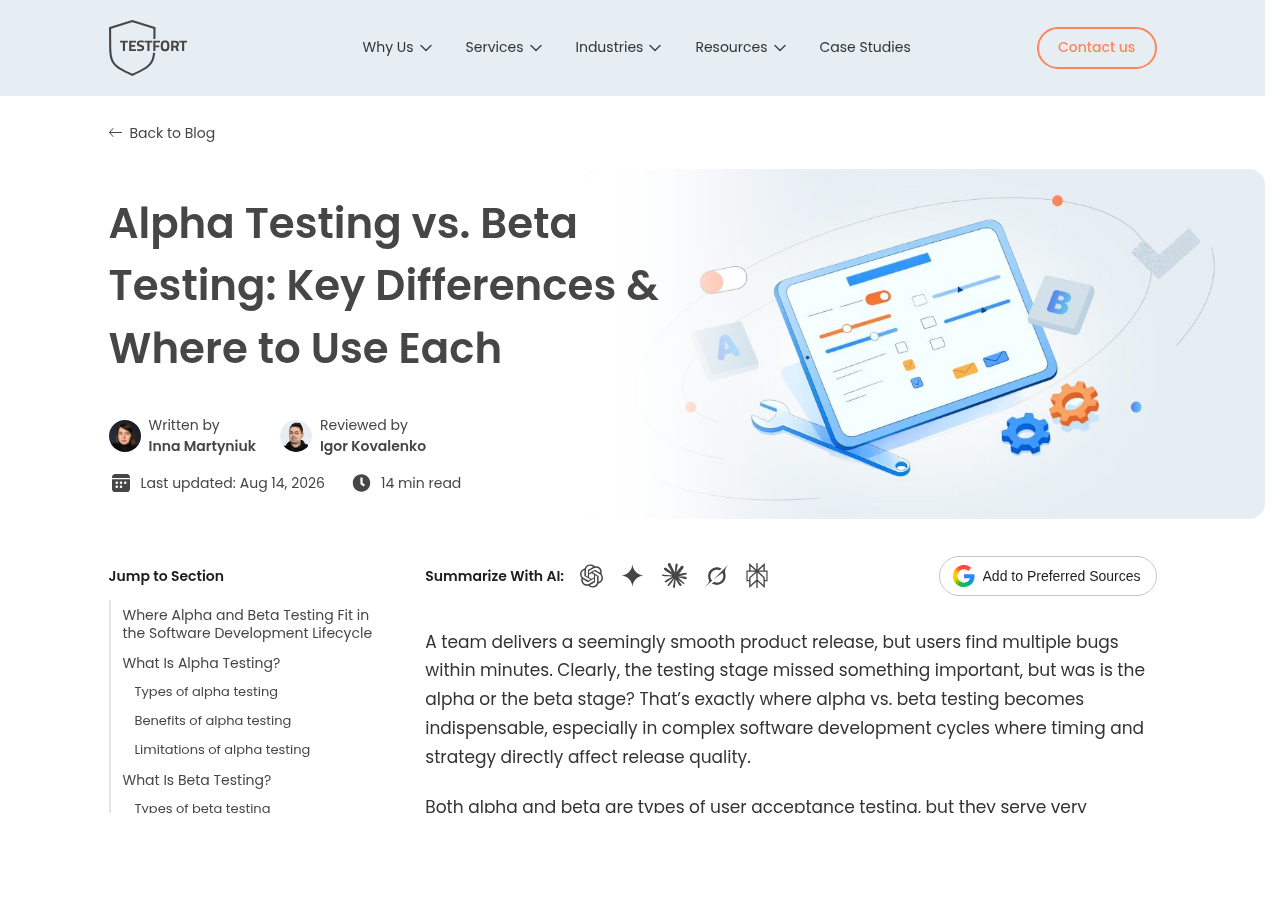
Both are types of user acceptance testing. As TestFort's guide puts it, one looks at the product with internal knowledge of how it works, the other is designed to prove it works in real use.
What alpha testing looks like
According to GeeksforGeeks, alpha testing runs in two phases: developers test first with debugging tools to catch crashes and major bugs, then the QA team tests in detail using white-box and black-box techniques. Bugs are logged, fixed and retested until the software meets the criteria to move to beta.
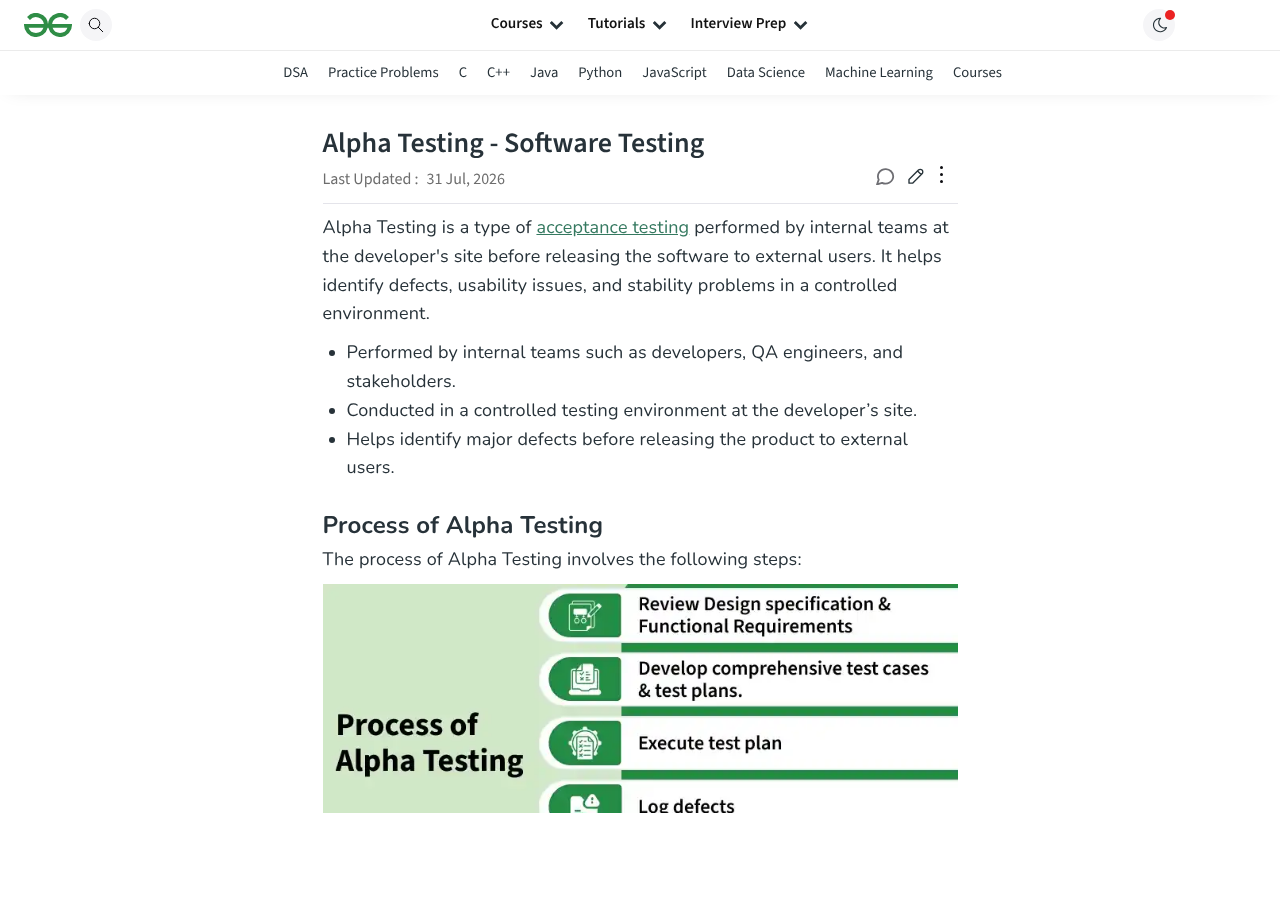
Alpha testers don't need technical skills when they test the front end, so close friends and family can join. That makes alpha the cheapest test you will run, but none of these people are your future customers.
What beta testing looks like
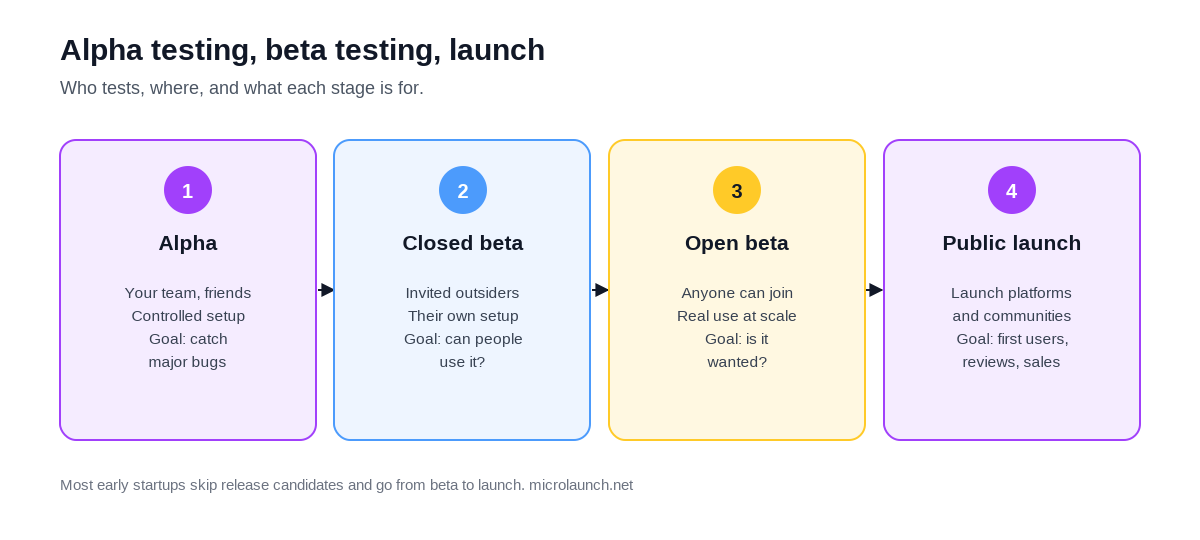
Beta testing is the product's first contact with the real world: a semi-public preview for a select group of real users. It can be closed (invited testers only) or open (anyone can join). The beta is where you learn whether you built something that solves a genuine problem, which is why it doubles as market validation.
After beta, some teams add a release candidate or gamma stage before the final release. Most early startups go straight from beta to launch.
Why your beta is a user acquisition channel
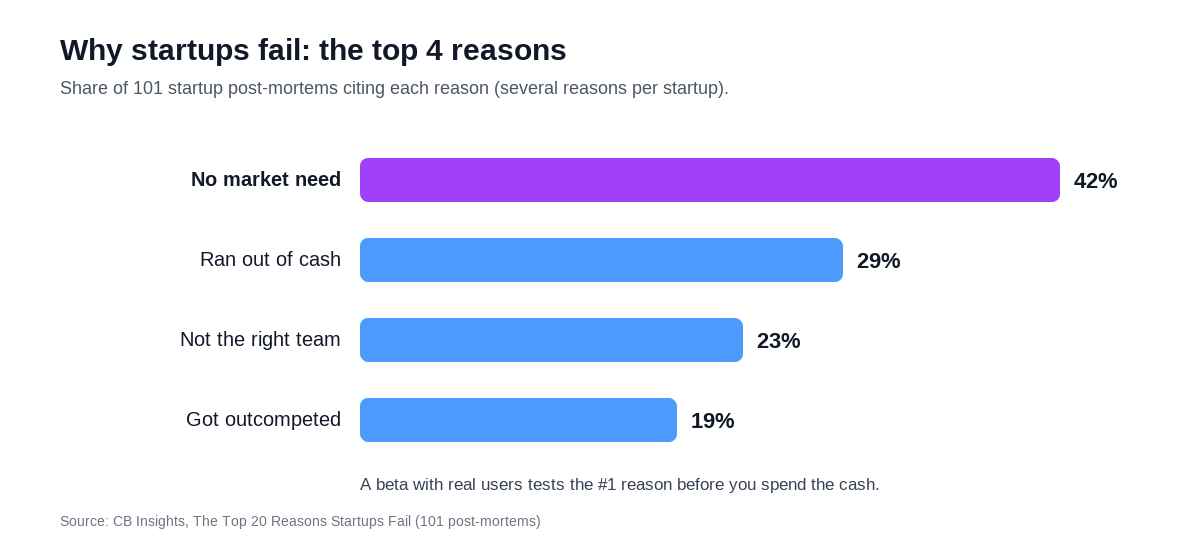
Most guides treat beta testing as a QA step. For a startup with no users yet, it is the first step of user acquisition, and the cheapest test of demand. In CB Insights' study of 101 startup post-mortems, no market need was cited in 42% of failures, ahead of running out of cash (29%):
- Testers become customers. People who used your product early and saw their feedback shipped are the easiest first sales.
- Feedback shapes the pitch. The words testers use to describe the problem are the words to put on your landing page.
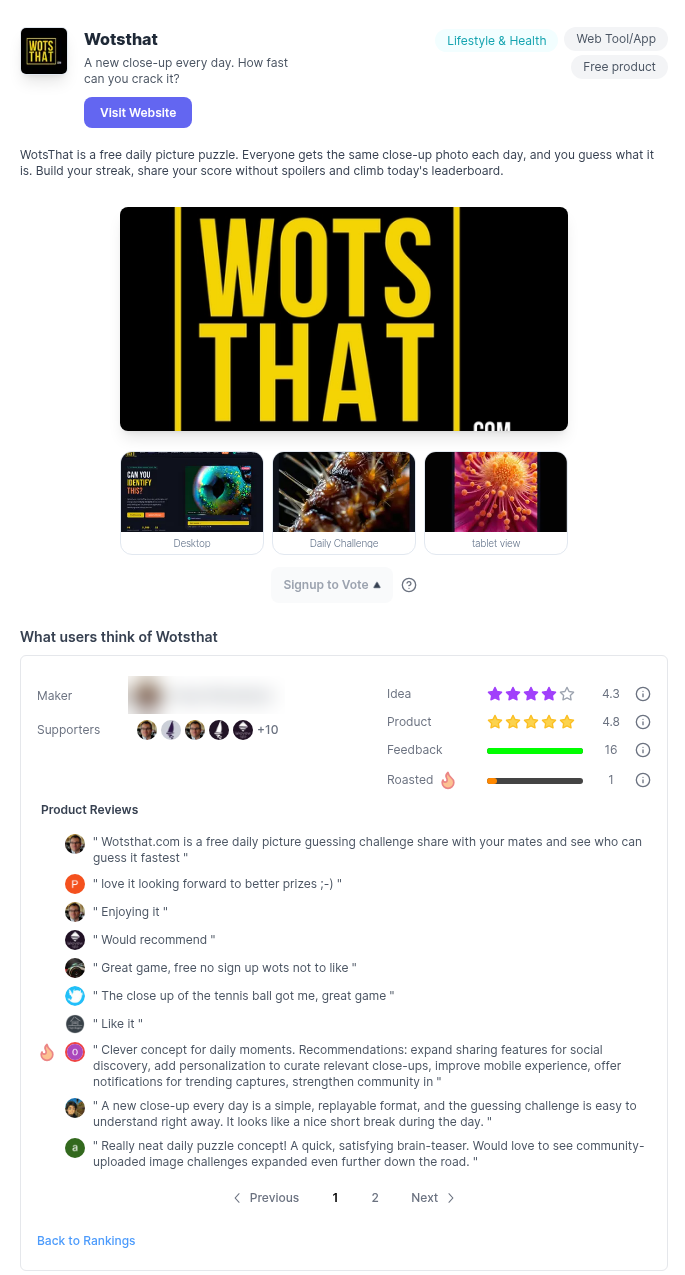
- Testimonials come from testers. A beta is where you collect the first quotes and reviews that make strangers trust you. On Microlaunch, those land on your product page as Idea and Product scores, written reviews and roasts:
- Testers talk. A good beta experience gets shared in the communities where your next users hang out.
So recruit beta testers where your future customers are, not only where testers are easy to find. Our user acquisition guide shows how a beta and a launch feed every other channel.
Where to recruit beta testers
The best places to recruit beta testers are the ones your future customers already visit. Our beta testing websites guide lists more of them, and our beta testers guide covers how many you need.
| Where | What you get | Trade-off |
|---|---|---|
| Microlaunch | A launch with 30 days of exposure, feedback, roasts and testimonials from builders | Paid packs for the full reach, but 30 days of exposure instead of one launch day |
| BetaList | Early-access discovery for upcoming startups | You compete with many startups featured each day |
| Product Hunt and other launch platforms | A burst of early adopters on launch day | Visibility often fades after the day |
| Reddit and niche communities | Users with the exact problem you solve | Strict self-promotion rules; give before you ask |
| Your own network and waitlist | Fast, forgiving testers | Friendly feedback, not always honest |
Microlaunch
Microlaunch is a launch platform where startups launch, get 30 days of continuous visibility, receive honest feedback and roasts, and collect testimonials. It says it is used by 1800+ startups and founders, and reports 650,000+ unique visitors in total. One founder, Nathan Chua of Snipowl, says 14.5% of his traffic came from there.
- Launch Pro lets you pick your launch date and adds featured spots, verified reviews and a badge, a marketplace spot to publish deals and DR65+ do-follow backlinks.
- Launch Everywhere adds 50+ launch and SaaS directories submitted for you, which spreads your beta across many places at once. Both are on the Premium page.
- You can re-launch for major feature releases, which fits a beta that ships often.
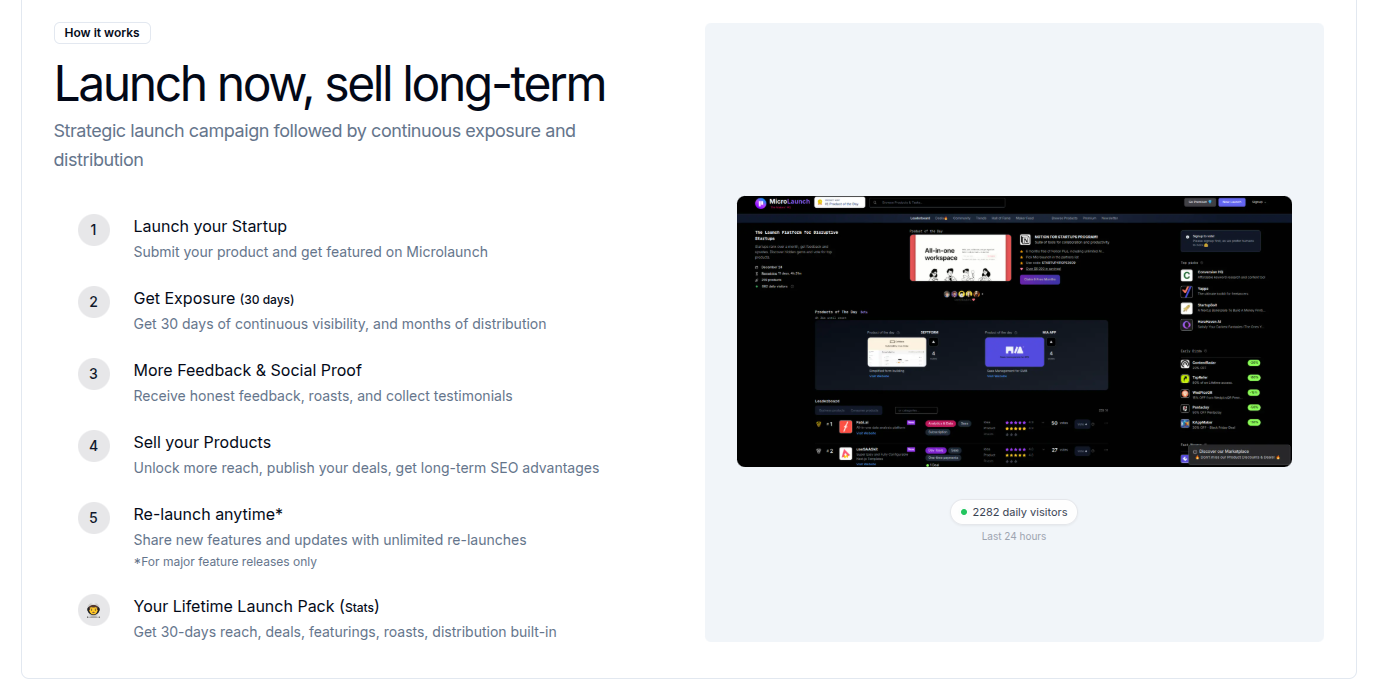
Browse recent launches to see how products collect ratings and roasts, or check the deals marketplace if you want to offer beta testers an early-bird price.
BetaList
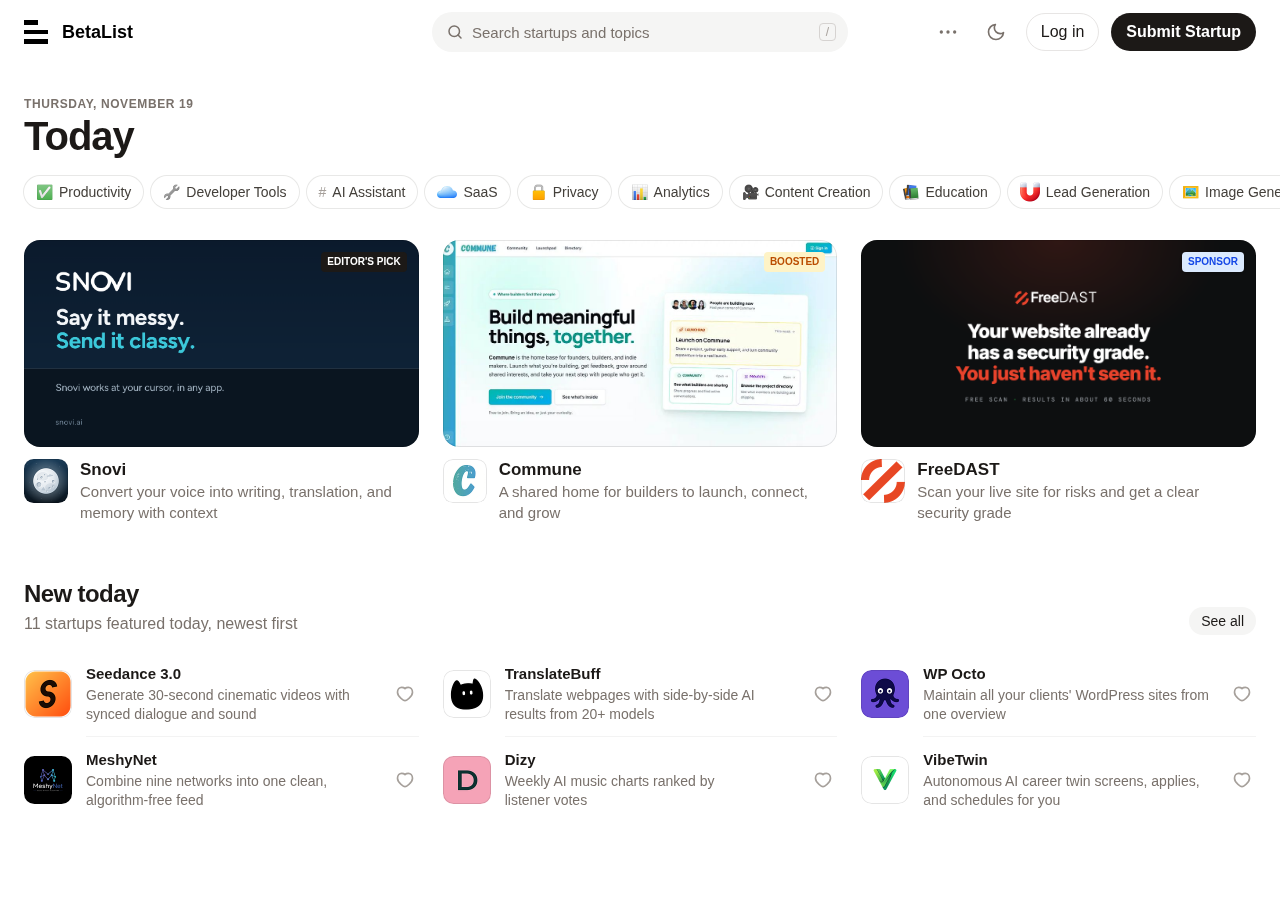
BetaList lets people discover and get early access to upcoming startups. The homepage features new startups every day, newest first, and founders can boost their listing.
Launch platforms and directories
Each launch platform reaches a different crowd of early adopters. Our Product Hunt alternatives guide compares the main ones. Listings also give you your first backlinks; see our link building guide for startups for what comes after.
Reddit and communities
Communities where your target users already discuss their problem give you the most relevant testers. Read the rules, take part before posting, and ask for feedback rather than signups. r/microlaunch has 6,000+ founders who share launches and trade feedback, a good place to find testers who build products themselves.
How to run a beta that brings users
- Finish alpha first. Don't spend your one first impression on crashes. Fix major bugs internally before recruiting outsiders.
- Decide closed or open. A closed beta gives deeper feedback from fewer people; an open beta brings more users and more noise. For usability, small rounds work: Nielsen Norman Group finds 5 testers surface about 85% of the problems, so test, fix and repeat.
- Recruit where customers are. Mix a launch platform, a community and your own network, as in the table above.
- Make feedback easy. One short form or a chat channel beats a long survey. Our product feedback guide covers the tools and how to read ratings and roasts.
- Ship fixes and say so. Tell testers which of their suggestions you shipped. That is what turns testers into fans.
- Ask for testimonials and a first purchase. Offer testers an early-bird deal or lifetime price; our AppSumo alternatives guide covers where founders publish such deals.
- Launch publicly when the beta is stable, with the testimonials you collected. Our product launch guide walks through launch day, and our comparison of product launch software shows where to launch.
Ready to open your beta? Launch on Microlaunch to put your product in front of builders for 30 days and collect the feedback, roasts and testimonials your public launch needs.
Frequently asked questions
What is the main difference between alpha and beta testing?
Alpha testing is done internally by your team in a controlled environment to find major bugs. Beta testing is done by real external users in their own environment to check usability and real-world fit.
Which comes first, alpha or beta testing?
Alpha comes first. Beta starts once the major defects found in alpha are fixed and the product is deployed.
Can a startup skip alpha testing?
You can, but beta testers then hit the bugs your team would have caught. For a startup, beta testers are also your first potential customers, so a buggy beta costs users, not just time.
Where can I find beta testers for my startup?
Launch platforms like Microlaunch and BetaList, communities such as Reddit where your target users gather, and your own network or waitlist. Recruit where your future customers are.
How do I turn beta testers into customers?
Ship their feedback and tell them, ask for a testimonial, and offer an early-bird price before the public launch.