Beta Testing Websites: Where to Find Real Testers
Where to find real beta testers: the best beta testing websites, subreddits and launch platforms, and a plan to go from 0 to 10 to 100 testers.
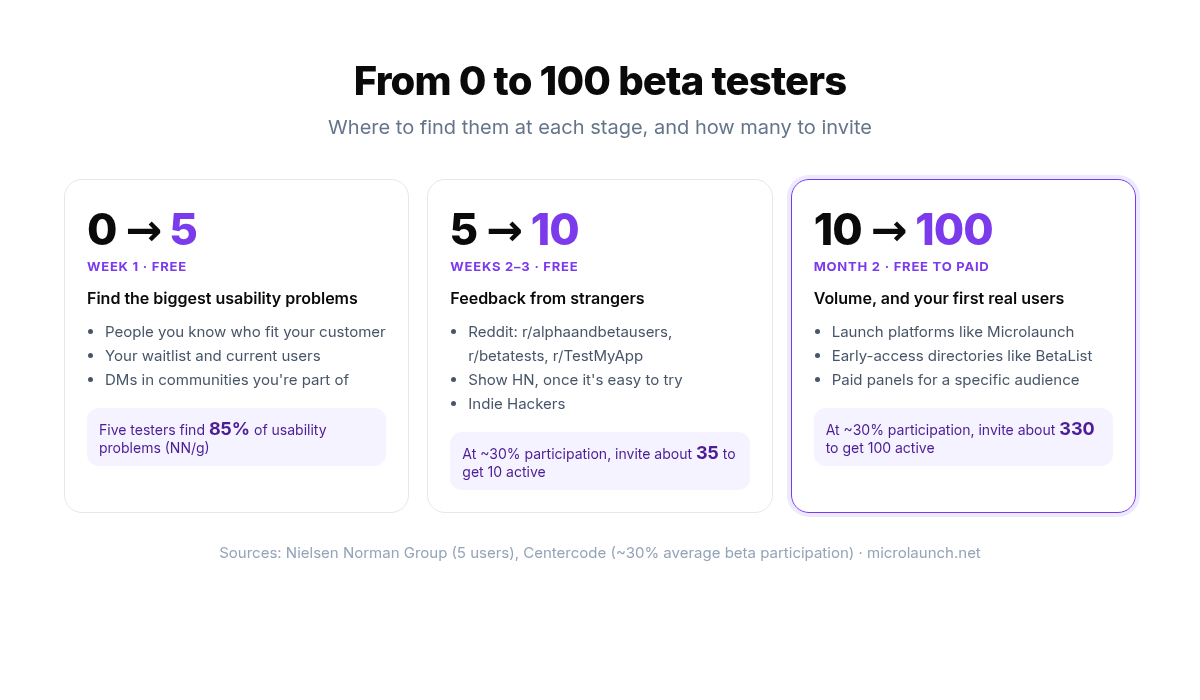
The best beta testing websites for a startup are the places your future customers already spend time. Reddit communities like r/alphaandbetausers, Show HN and Indie Hackers are free and cost you only effort. Launch platforms like Microlaunch and directories like BetaList bring volume, and testers who can turn into your first users. Paid panels like BetaTesting recruit a specific audience when you need one fast. Which one fits depends on how many testers you have today:
- 0 to 5 testers: people you know who fit your customer, your waitlist, and direct messages in communities you're part of.
- 5 to 10: strangers from Reddit, Show HN and Indie Hackers.
- 10 to 100: launch platforms, early-access directories and, if you have a budget, paid panels.
This guide is published by the Microlaunch team, and Microlaunch is one of the options. Facts about each site come from its own pages, read on 2026-11-20. Reddit member counts come from community trackers and are approximate.
The fastest route: launch your beta on Microlaunch
If your product already works well enough for strangers to use, a public beta launch gets you testers and early users at the same time. The free channels below take more effort but cost nothing, so most founders combine both.
1. Microlaunch: testers who can become users
What it is: a launch platform where startups launch, get 30 days of continuous visibility and collect honest feedback, roasts and testimonials from the community.
Who it suits: founders whose product works well enough to use and who want testers who might stay on as users. A beta launch here doubles as user acquisition, since the same visitors who test can sign up, review and buy.
Honest limit: it's a public launch, not a private test. Visitors see your product as it is, so it suits an open beta better than a confidential one.
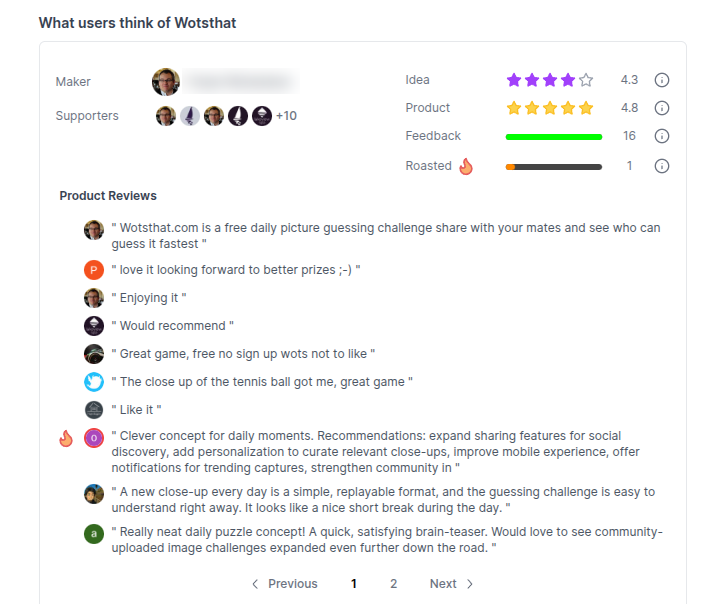
On Wotsthat's launch page, a daily picture puzzle, users left 16 pieces of feedback and rated the product 4.8 out of 5, with comments like "Great game, free no sign up wots not to like" and concrete suggestions for what to build next. That's the kind of feedback a beta needs, from people who chose to try it.
Microlaunch Premium gives your launch a chosen date, featured spots, verified reviews and do-follow backlinks, and Launch Everywhere adds submission to 50+ launch and SaaS directories. Microlaunch reports 650,000+ unique visitors in total and 30k+ a month.
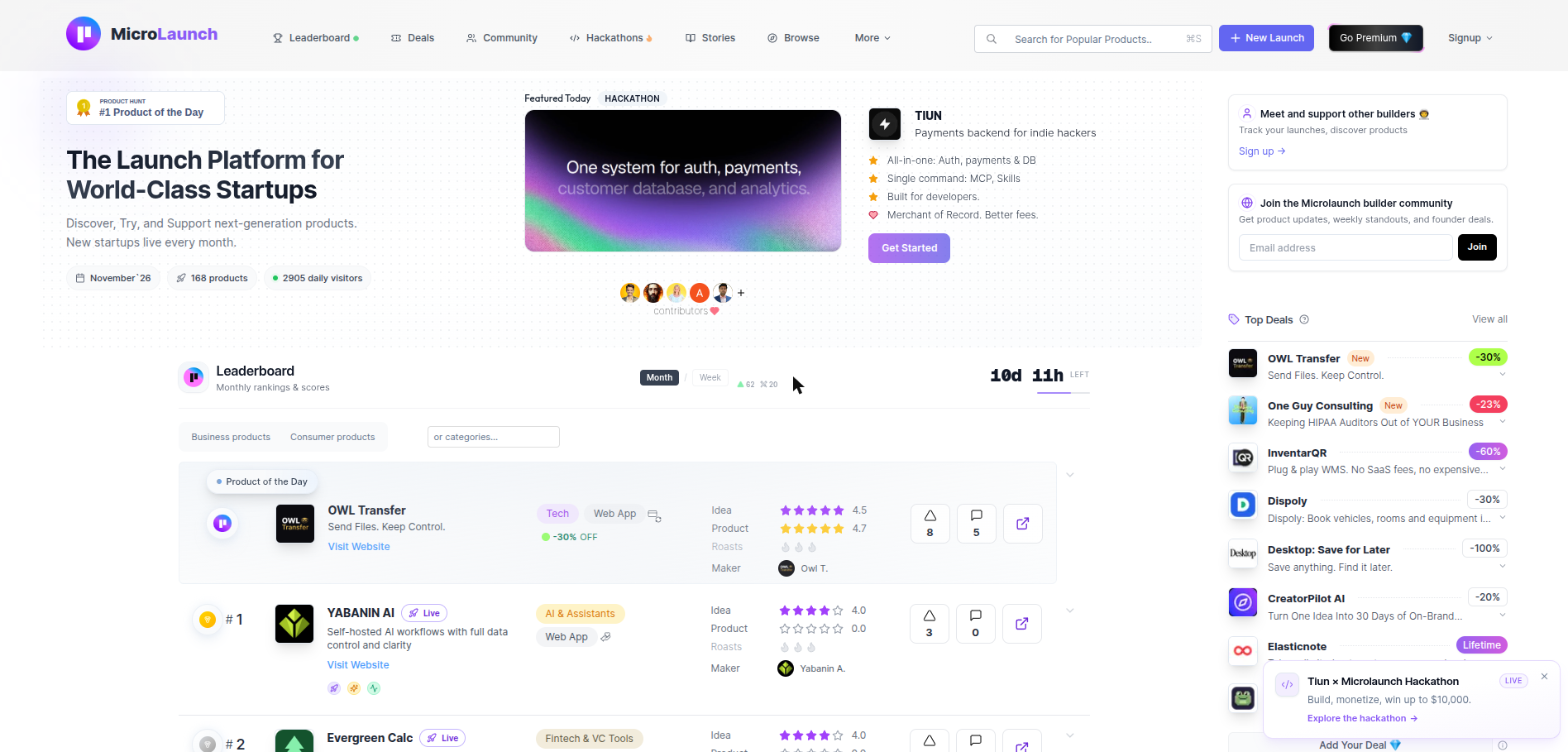
New launches show up on the Microlaunch homepage and its monthly leaderboard. Visitors rate each product's idea and the product itself, leave reviews and roasts, and click through to try it. For a beta, that means feedback from people who weren't asked by you, plus a public page you can point new testers to.
How many beta testers you actually need
Fewer than you think for the first round, and more than you think for the second.
For finding usability problems, five people are enough to start. In the Nielsen Norman Group's research, the first study with five participants found 85% of the usability problems. With budget for 15 testers, it recommends three rounds of five, fixing problems between rounds, over one big round of 15.
For a beta, expect most people who sign up to go quiet. Centercode puts average beta participation at about 30%. So plan to invite about three times the number of active testers you need: around 35 invites for 10 active testers, around 330 for 100.
Mobile apps can have a hard minimum. Google Play requires developers with personal accounts created after November 13, 2023 to run a closed test with at least 12 testers, opted in continuously for at least 14 days, before going to production.
From 0 to 10 testers: free channels
At this stage, you want people who will actually use the product and tell you what's broken. That takes conversations, not a listing.
Start with people who fit your customer
Ask five people who have the problem your product solves: former colleagues, users of a competitor, people who replied to your posts or joined your waitlist. Watch them use it, live or on a call, before sending a survey. This is the round that catches the problems you are too close to see.
Reddit: the best free channel for strangers
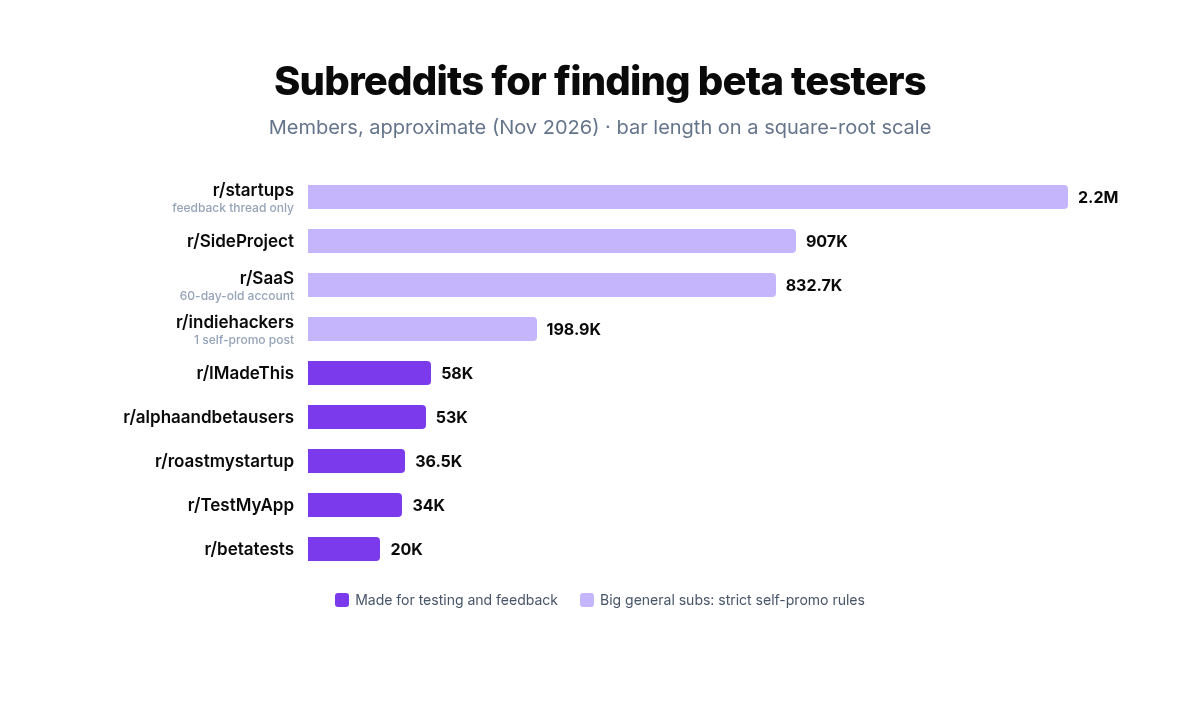
Reddit is where most founders find their first testers who don't know them. Some subreddits exist for exactly this. The big startup subreddits are larger, but only allow promotion in specific threads.
| Subreddit | Members (approx.) | What to know before posting |
|---|---|---|
| r/microlaunch | Our community | Our own subreddit: share your launch or beta and ask makers for feedback |
| r/alphaandbetausers | 53K | Made for recruiting alpha and beta users; Rankhog found no subreddit-specific rules |
| r/betatests | 20K | Makers post a product to get real feedback |
| r/TestMyApp | 34K | Don't advertise services in comments, which counts as spam; links a Discord |
| r/roastmystartup | 36,462 | Blunt feedback; posts with a Product Hunt or Vercel link are removed |
| r/IMadeThis | 58K | Showcase what you built |
| r/SideProject | 907K | For sharing and getting constructive feedback on side projects |
| r/indiehackers | 198.9K | One self-promotion post per user, with the Self Promotion flair |
| r/SaaS | 832.7K | Needs a 60-day-old account; one mention or three links every 60 days; disclose affiliation |
| r/startups | 2.2M | Share your startup only in the stickied share thread; feedback requests go in the feedback thread |
Member counts come from The Hive Index and Rankhog, checked in October and November 2026. Rules change, so read each subreddit's sidebar before you post.
How to post so people actually test:
- Ask for something specific. "Can 5 people try the onboarding and tell me where they got stuck?" gets replies. "Check out my app" doesn't.
- Say who it's for, so the right people self-select.
- Make it free and quick to try, with no long signup if you can avoid it.
- Reply to every comment, and give feedback on other people's posts. Subreddits notice who only takes.
Show HN
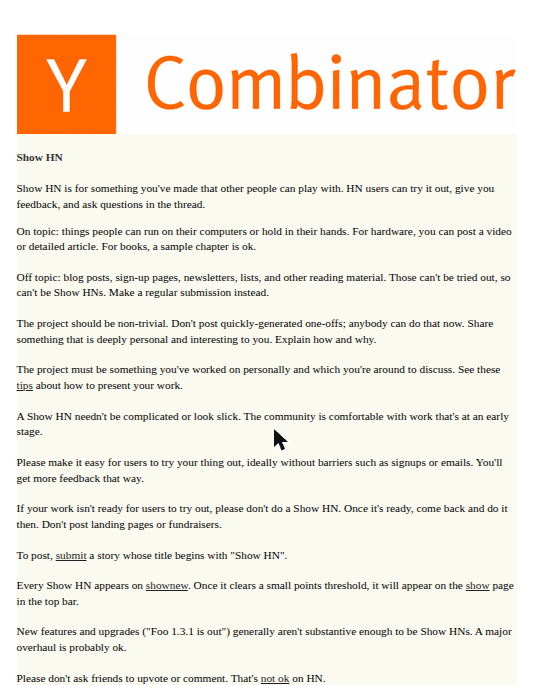
Hacker News is a strong channel for developer tools and anything technical. Its Show HN guidelines say Show HN is for something you've made that other people can play with. Blog posts, sign-up pages and newsletters are off topic. The guidelines ask you to make it easy to try, ideally without barriers such as signups or emails, and not to ask friends to upvote or comment. If your beta still needs an invite, wait until it doesn't.
Indie Hackers
Indie Hackers has roughly 140K members, according to The Hive Index. Founders there respond well to build-in-public posts with real numbers and a clear ask. It's a good place to find testers who are founders themselves.
From 10 to 100 testers: launch platforms and directories
Once the obvious problems are fixed, you need volume and people who might become customers. Here, a public listing works better than one-to-one asks: launch on Microlaunch as covered above, then add directories.
2. BetaList
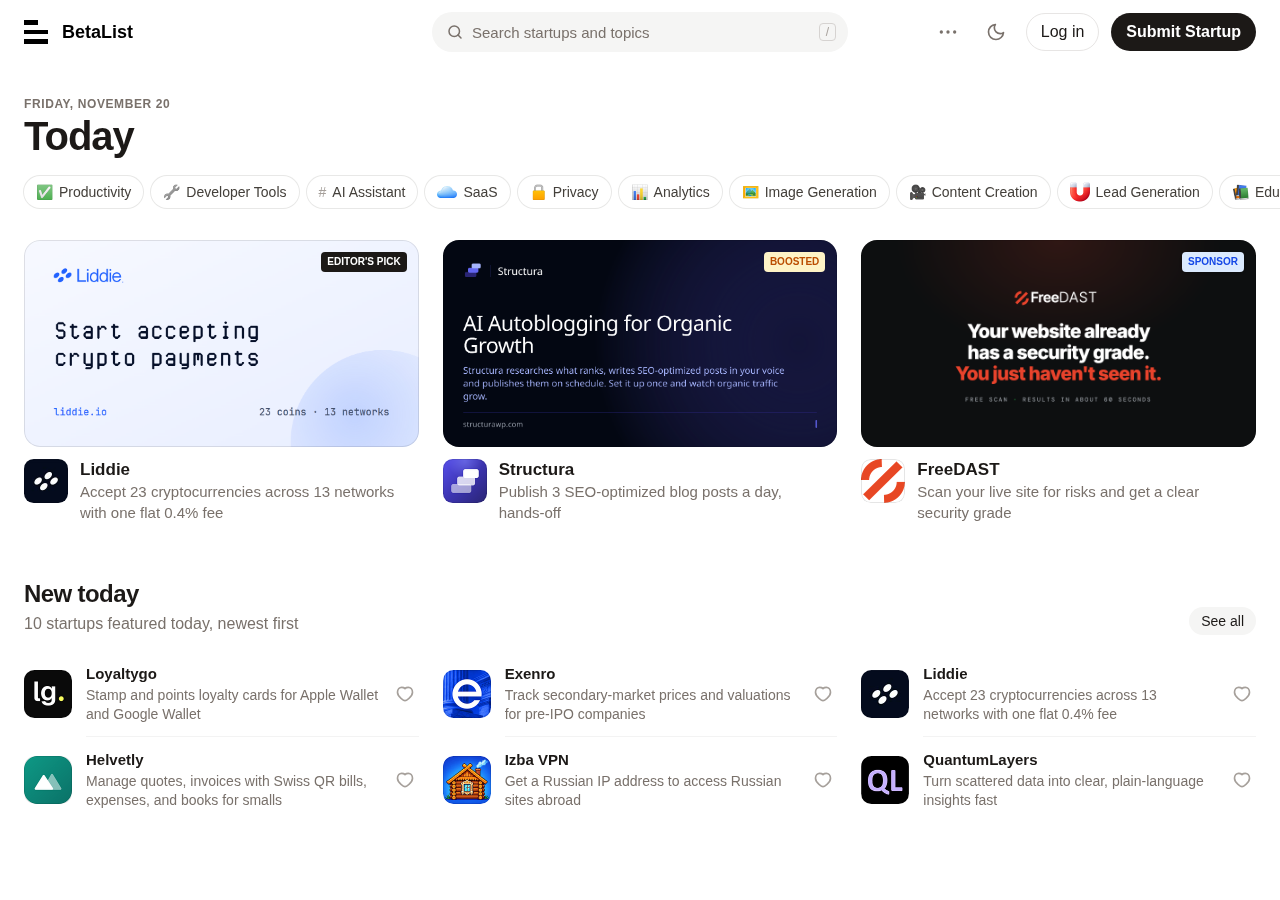
What it is: a directory of upcoming startups that gives its visitors early access to them, with a set of startups featured every day.
Who it suits: startups that are still in beta or pre-launch and want early adopters to join a waitlist.
Price: all submissions are paid, with no free option; the price is shown in the submission form, and rejected startups get a full refund.
Honest limit: you get early adopters who browse new products, not testers who commit to a test plan. Expect sign-ups, not structured bug reports.
Other launch platforms and directories work the same way. Our Product Hunt alternatives guide compares the main ones.
Paid tester panels: when you need a specific audience
Pay for testers when you need a particular demographic, many devices, or results within days. Don't pay to learn whether people want your product: recruited testers aren't your buyers.
3. BetaTesting
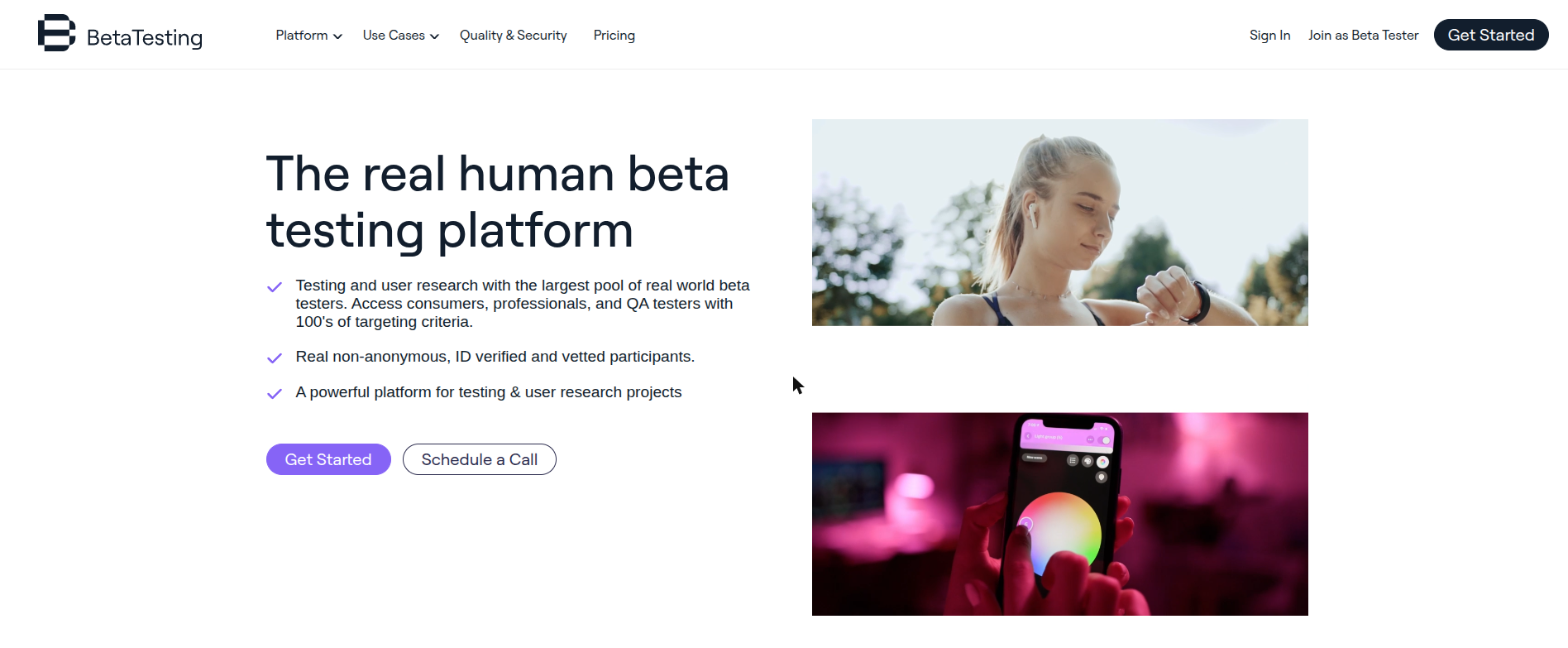
What it is: a platform for beta testing with real people in real environments, with consumers, professionals and QA testers.
Price: its pricing page lists a Project plan from $23 - $39 / credit, with simple tests starting at 1 credit per tester; Teams at $3,588 / year, which includes 225 credits; and Enterprise starting at 20K annually. It offers 5 free credits to start.
Honest limit: the testers are recruited for the test, not drawn from your future customers.
4. Global App Testing
A software testing service that combines automation with crowdtesting, with clients from small startups to large enterprises. It suits functional and UX testing across devices and markets. It is built for QA and engineering teams, so an early-stage founder looking for a first handful of users will get more from the free channels above.
5. Ubertesters
A managed crowdtesting platform that connects you with vetted professional testers worldwide. Good for testing across many devices and countries. Professional testers find bugs well, but their opinion on whether they'd pay is less useful.
6. Rainforest QA
A cloud testing service that blends no-code automated tests with input from a global tester pool. It leans toward repeatable QA rather than product feedback.
7. UserTesting
A usability testing platform that captures videos of real users and their feedback. Best for testing onboarding, copy and flows. Sessions are short and scripted, so they show first impressions rather than use over weeks.
8. Centercode
An enterprise-grade beta management system with tester recruitment, workflows and community engagement. Built for companies running regular programs with many testers, so it's heavier than a startup with ten testers needs.
Tools to run the beta
Once you have testers, these tools get the build to them and bring feedback back.
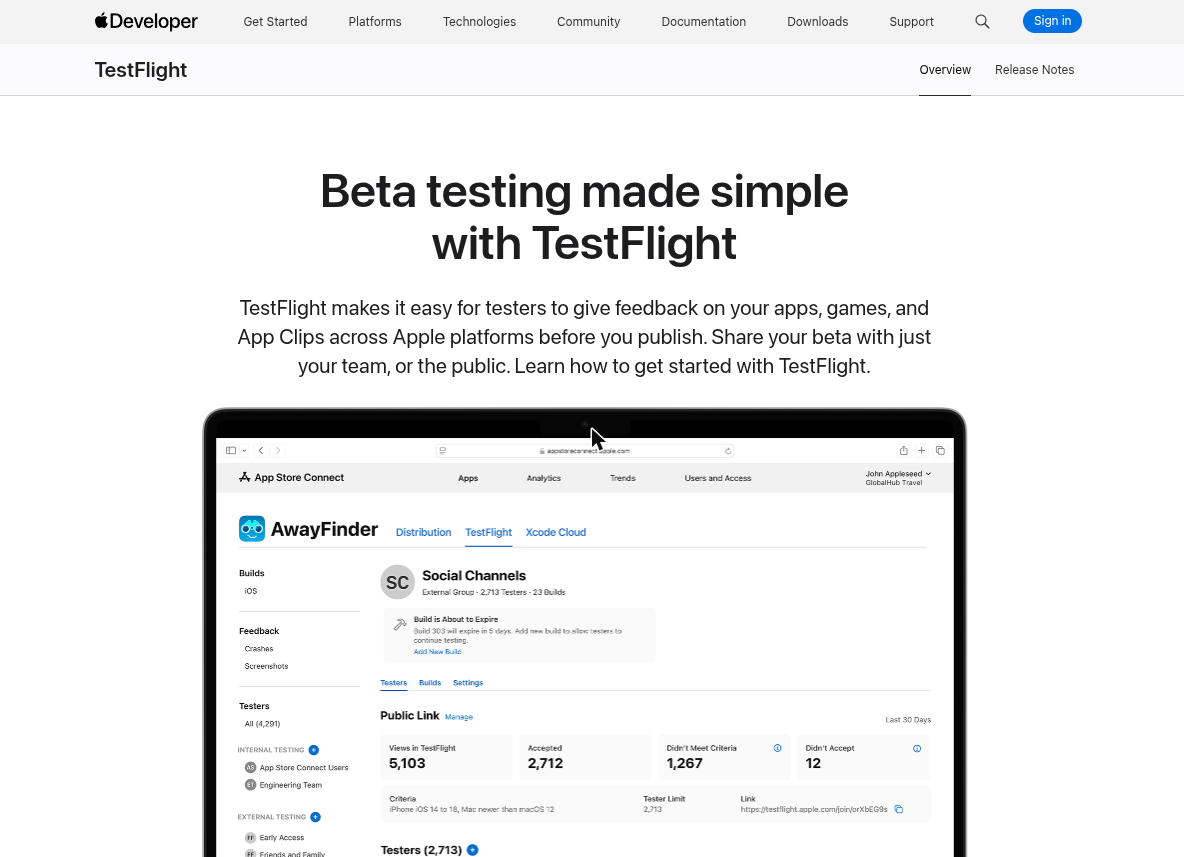
- TestFlight: Apple's beta testing service for iOS and other Apple platforms. Apple's page says you can invite up to 100 members of your development team and up to 10,000 external testers. A build can be tested for up to 90 days, and the first external build goes through App Review.
- TestFairy: mobile app distribution and monitoring that records tester sessions, so you see what happened before a bug.
- Instabug: a mobile-first tool combining crash reporting, in-app bug submission and user feedback surveys.
- Marker.io: lets testers submit annotated screenshots and session replays straight from your website.
- Usersnap: a user feedback platform for web products.
- UXCam: records user sessions and generates heatmaps to show behavior patterns in apps.
A spreadsheet and a shared feedback form also work for a first beta with a dozen people. Add a tool when the reports get hard to track.
All beta testing websites compared
| Website | Type | Cost | Best for |
|---|---|---|---|
| Reddit (r/alphaandbetausers, r/betatests, r/TestMyApp) | Communities | Free | First strangers, honest feedback |
| Show HN | Community | Free | Developer and technical products |
| Indie Hackers | Community | Free | Testers who are founders |
| Microlaunch | Launch platform | Launch packs | Testers who can become your first users |
| BetaList | Early-access directory | Paid submission | Pre-launch waitlist sign-ups |
| BetaTesting | Tester panel | From $23 per credit | A recruited audience, fast |
| Global App Testing, Ubertesters, Rainforest QA | Managed testing | Quote | QA across devices and markets |
| UserTesting | Usability videos | Quote | Onboarding and flows |
| TestFlight | Distribution | Free | iOS betas |
Turn testers into your first users
A beta is also your first acquisition channel. The people who test are the warmest leads you'll ever have.
- Collect emails from day one, so you can tell testers when the product launches.
- Tell testers what changed because of them. People who see their feedback ship tend to stick around and recommend you.
- Ask your best testers for a review or testimonial when you launch publicly.
- Launch publicly once the beta is stable, so the 10 to 100 testers become the first comments and upvotes on launch day. Our product launch guide covers the steps.
Frequently asked questions
Where can I find beta testers for free?
Start with people who fit your customer and your waitlist. Then post in subreddits made for testing, like r/alphaandbetausers, r/betatests and r/TestMyApp, do a Show HN once your product is easy to try, and post on Indie Hackers.
What are the best beta testing websites for startups?
For free testers, Reddit, Show HN and Indie Hackers. For volume and testers who can become users, launch platforms like Microlaunch and directories like BetaList. For a recruited audience, paid panels like BetaTesting.
How many beta testers do I need?
Five testers per round is enough to find most usability problems. For a public beta, expect about 30% of sign-ups to take part, so invite about three times the number of active testers you want.
Is Reddit good for finding beta testers?
Yes, if you post in the right subreddits and follow their rules. Subreddits like r/alphaandbetausers exist for recruiting testers. Large ones like r/startups and r/SaaS limit promotion to specific threads or a few links every 60 days.
Are paid beta testing sites worth it?
They are when you need many devices, a specific demographic or results within days. They are less useful when you want to know whether your target customers will pay, because recruited testers aren't your buyers.