This task can be performed using Decloak - Web security intelligence
Security intelligence for teams from vibe coders to enterprise
Run an AI penetration test
Get written authorization, define allowed hosts and accounts, and set request rate limits before AI penetration testing. Use a production-like environment with synthetic data when possible. If the public site must be tested, schedule a window, enable monitoring, and prepare rollback.
Run unauthenticated and authenticated checks, then inspect exposed secrets, database access, client and server configuration, dependencies, and business logic. Validate every finding, fix confirmed issues, rotate leaked credentials, and retest. Launch only when agreed blockers are closed and core user flows still pass.
Best product for this task

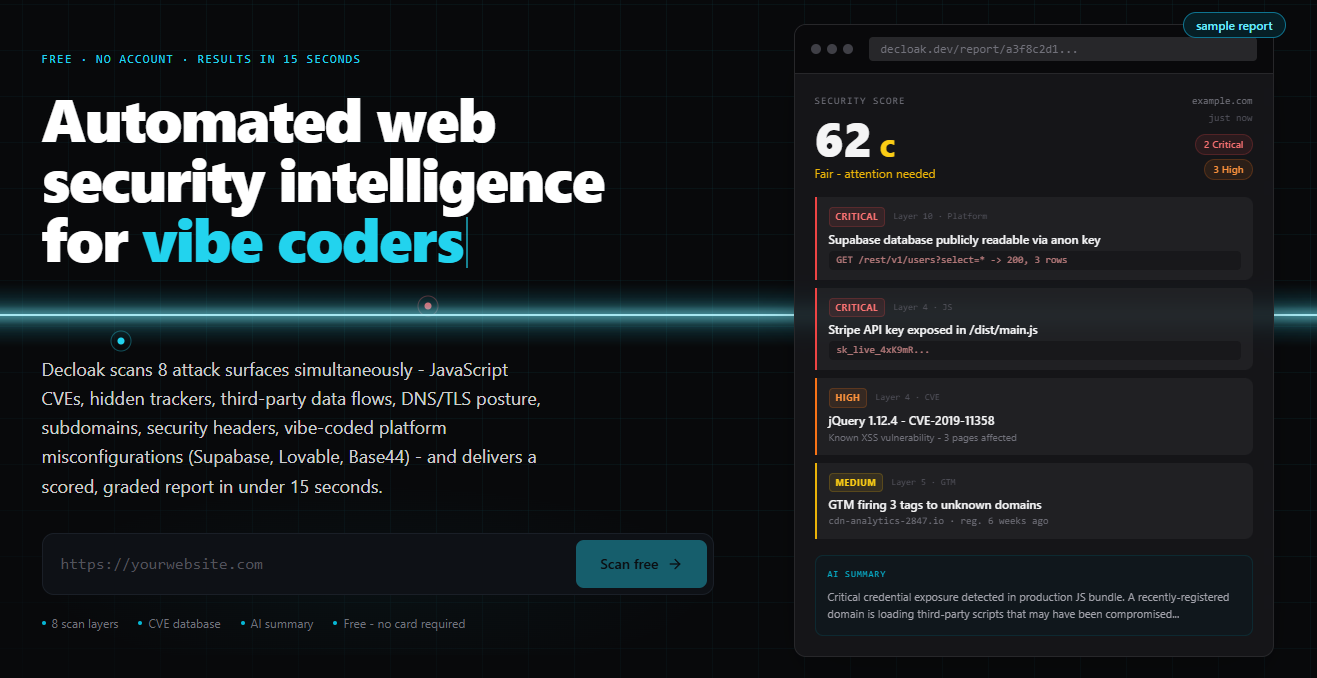
Decloak scans any live URL across 8 layers, catching exposed API keys, misconfigured databases, and vulnerable libraries, including the specific failures common to apps built with Lovable, Supabase, and Base44. Paid tiers deploy an AI agent that investigates a whole site, run AI-powered penetration testing, and map findings to SOC2, ISO 27001, NIS2, and DORA controls, all for a fraction of what tools like AppCheck or Qualys cost.
What to expect from an ideal product
- Authenticated and unauthenticated site coverage
- Checks for exposed secrets, databases, and vulnerable libraries
- Configurable scope and request rate safeguards
- Reproducible evidence for validating findings
- Targeted retesting and compliance control mapping
More about release gates
Define the web security release gate before scanning so severity debates do not delay launch or allow a confirmed, exploitable issue to be waived informally.
- Block launch for exposed credentials, public database access, or confirmed critical and high severity exploits.
- Assign an owner and deadline to accepted lower severity findings, and document each exception.
- After fixes, rerun affected tests and smoke test login, permissions, API calls, and other critical flows.