This task can be performed using GrowthMap
The growth solution every indie developer struggles to solve
Best product for this task

GrowthMap
marketing
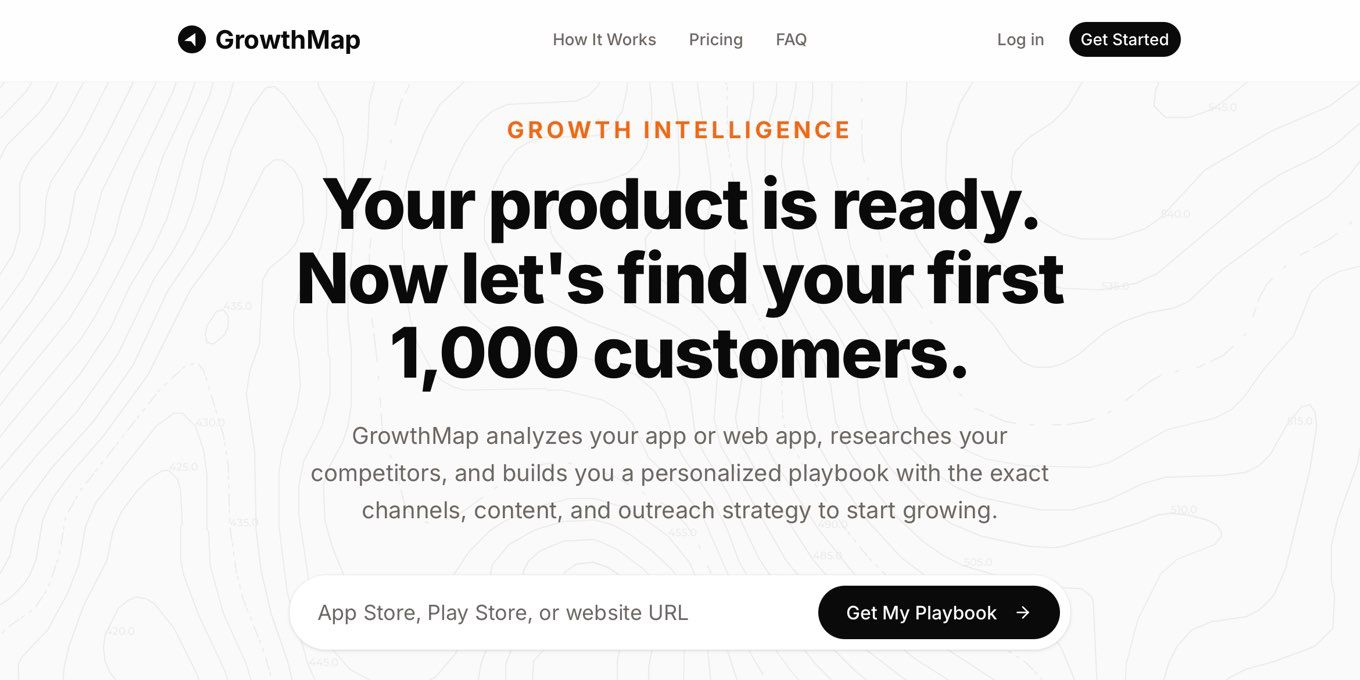
GrowthMap will help you find your first 1,000 customers. It analyzes your app or Saas, researches your competitors, and builds you a personalized playbook with the exact channels, content, and outreach strategy to start growing.
If you are building a SaaS product or mobile app and growth has stalled, competitor research can show you what to fix first. This guide explains how to identify real competitors, compare features and positioning, and analyze reviews for customer pain points. You will finish with a practical competitor matrix and specific product or messaging gaps to exploit.
1. Identify competitors customers already consider
Do not start with companies that seem similar from a technical perspective. Start with products your target customer might choose instead.
Use these discovery methods:
- Search the phrases your product targets.
- Check App Store or Play Store categories if you have a mobile app.
- Review comparison pages, community discussions, and product directories.
- Ask: “What would a customer use if my product did not exist?”
For a SaaS product, include direct alternatives, adjacent tools, and manual solutions such as spreadsheets or agencies. For an app, include products with similar use cases, audiences, or store keywords.
Create a list of 3 to 10 competitors. Record each product’s URL, audience, pricing, key promise, ratings, review count, and primary acquisition channels. This is the foundation of a competitive analysis product workflow.
2. Build a feature and positioning matrix
Use a spreadsheet or this simple competitor feature comparison template for SaaS:
| Product | Core feature | Important feature | Pricing | Main promise | Audience |
|---|---|---|---|---|---|
| Your product | Yes/No | Yes/No | Your price | Your promise | Your segment |
| Competitor A | Yes/No | Yes/No | Listed price | Their promise | Their segment |
For apps, add store rating, screenshots, onboarding steps, subscription options, and review themes.
Do not only count features. Mark whether each feature is:
- Essential to the customer’s job
- Mentioned prominently in marketing
- Difficult for competitors to use well
- Missing across most products
A feature gap matters when customers repeatedly request it, competitors explain it poorly, or your product can deliver it more simply. A crowded feature is rarely a strong differentiator by itself.
Next, compare positioning. Write each competitor’s promise in one sentence. Look for differences in audience, urgency, outcome, and tone. This helps you find positioning gaps in competitor products, such as serving freelancers while every competitor targets larger teams.
If you need a broader SaaS marketing product comparison, keep the same matrix focused on the customer problem rather than a long list of capabilities.
3. Find customer pain points in reviews
Reviews often reveal problems that landing pages hide. Collect recent positive and negative reviews from relevant competitors, then group repeated comments into themes.
Look for phrases about:
- Missing features
- Confusing setup
- Poor support
- Unexpected pricing
- Slow performance
- Weak integrations
- Results that did not match expectations
Separate complaints from preferences. “I wish it had a dark mode” is different from “I cannot complete my workflow.” The second may represent a valuable product opportunity.
For competitor review analysis for app marketing, record the exact wording customers use. Those phrases can improve a store listing, onboarding copy, FAQ, and outreach messages. You can also build a SaaS customer persona based on competitor research by noting who complains, what they were trying to accomplish, and what triggered the purchase.
4. Turn gaps into a growth plan
Score each opportunity from 1 to 5 for customer urgency, competitor weakness, implementation effort, and marketing clarity. Prioritize gaps with high urgency, visible competitor weakness, and a clear explanation.
Your final action list should contain:
- One product improvement to test
- One positioning change
- One customer segment to prioritize
- Three content or SEO topics based on competitor demand
- Five outreach targets connected to that segment.
More topics related to GrowthMap
Similar topics
- GrowthMap Alternatives for Building a SaaS Customer Acquisition Plan
- How to Find Your First 1,000 SaaS Customers or App Users
- How to Build a Personalized Growth Plan for an Indie SaaS or App
- How to Find Competitor SEO and App Store Keywords for Early Growth
- From Zero Users to 1,000 Paying Customers: A Competitor-Driven Growth Workflow for Indie Apps