This task can be performed using GrowthMap
The growth solution every indie developer struggles to solve
Best product for this task

GrowthMap
marketing
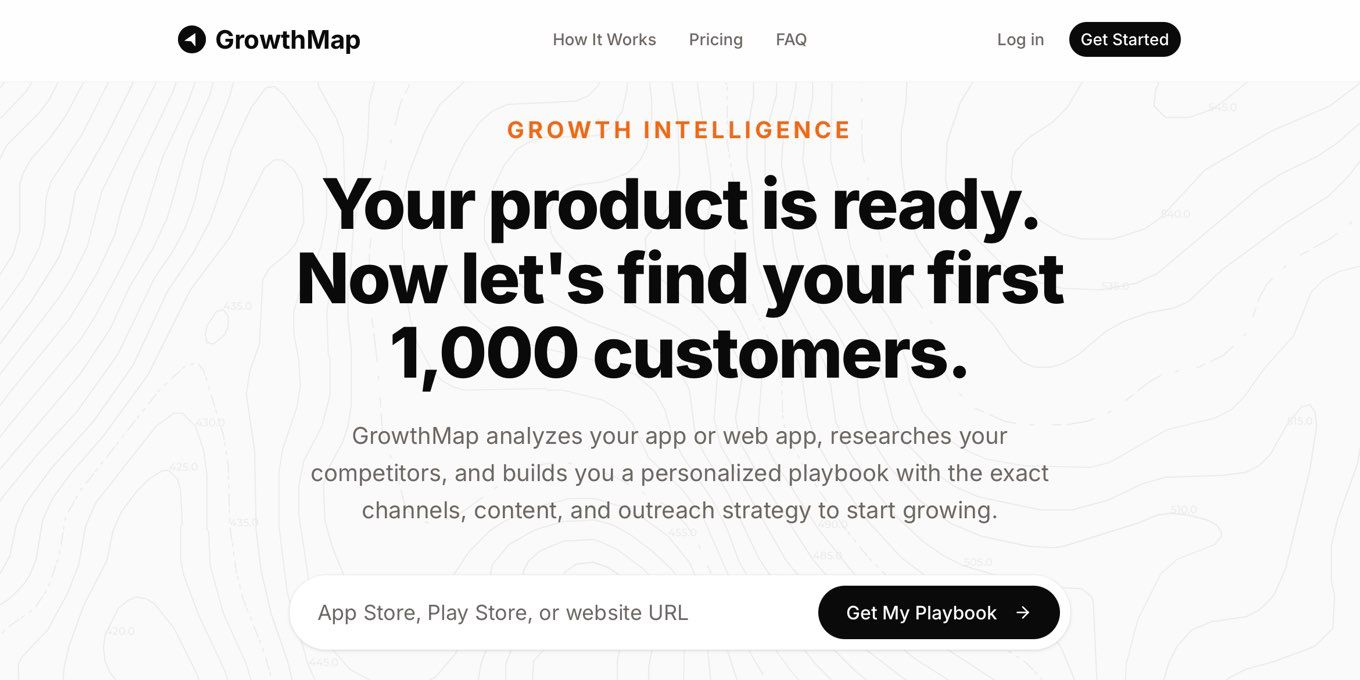
GrowthMap will help you find your first 1,000 customers. It analyzes your app or Saas, researches your competitors, and builds you a personalized playbook with the exact channels, content, and outreach strategy to start growing.
If you have an indie SaaS or app but no clear path to your first 1,000 customers, build a plan from your product, competitors, audience, and available channels. This guide shows how to turn that information into a focused 45-day plan, using a real example and measurable checks.
1. Define the product and the outcome
Before choosing channels, write down what you are selling and who should act first. The deciding factor among marketing products is whether they support this exact workflow.
For example, imagine a solo founder has a habit-tracking iOS app for remote workers. The initial outcome might be:
Get 100 qualified trial users in 45 days from remote-work communities and productivity content.
Record:
- Product URL or App Store listing
- Primary audience
- Main problem solved
- Activation event, such as creating a first habit
- Desired 45-day result
- Weekly time and budget available
This prevents a common mistake: creating a broad indie developer growth strategy that lists every possible channel but prioritizes none.
Your plan should also distinguish discovery from conversion. A post may attract attention, while onboarding, pricing, and product copy turn that attention into users. Review both before selecting tactics.
2. Gather evidence before choosing channels
A useful indie hacker customer acquisition strategy should be based on evidence, not personal preference. Compare:
- Three to ten direct competitors
- Their positioning, pricing, ratings, and reviews
- Keywords related to the problem
- Communities, newsletters, podcasts, and blogs serving the audience
- Repeated complaints and feature requests
- Channels where competitors appear consistently
For the habit app, competitor reviews might reveal that users want reminders that adapt to changing schedules. That creates a positioning opportunity and suggests content topics around flexible routines.
You can collect this manually, or use a competitive analysis product to structure the comparison. The key decision is whether each channel has a reachable audience and a believable message for your product.
Avoid copying a competitor’s channel mix. A large company may afford paid acquisition that does not suit a solo founder. Choose channels you can repeat for six weeks.
3. Turn findings into a personalized playbook
Convert the evidence into a short operating plan. For each selected channel, specify:
- Audience and problem
- Message or offer
- Weekly action
- Content or outreach asset
- Success metric
- Pivot threshold
A practical plan for the example might include:
- Search content: publish two articles targeting flexible habit routines
- Community outreach: answer three relevant questions weekly without leading with a sales pitch
- Partnerships: pitch five productivity newsletters with a tailored article idea
- App listing: test copy that emphasizes schedule flexibility
- Measurement: track listing visits, installs, activation, and retained users
This is more useful than an automated SaaS growth strategy that produces generic channel suggestions. A customer acquisition product can help organize the work, but you still need realistic time limits and clear ownership.
GrowthMap accepts a website, App Store, or Play Store URL. It analyzes the product, researches competitors, gathers SEO data, identifies outreach targets, and creates a 14-section playbook with prioritized channels, draft content, pitch emails, and a 45-day action plan. It is designed as a growth strategy generator for indie hackers, not a generic checklist.
4. Verify the plan before committing
Run a pre-launch review:
- Can you explain the audience in one sentence?
- Does every channel connect to a documented audience need?
- Can you complete the weekly actions with your available time?
- Does each tactic have one primary metric?
- Are your claims supported by the product today?
- Do you have a pivot threshold after two to four weeks?
For the example, a weak signal might be impressions without store visits. That suggests a message or targeting problem. Store visits without activation may indicate an onboarding or listing mismatch. Treat a rescan or playbook review as an evaluated signal, then verify decisions with real conversion and retention data.
More topics related to GrowthMap
Similar topics
- GrowthMap Alternatives for Building a SaaS Customer Acquisition Plan
- How to Find Your First 1,000 SaaS Customers or App Users
- How to Use Competitor Research to Find SaaS and App Growth Opportunities
- How to Find Competitor SEO and App Store Keywords for Early Growth
- From Zero Users to 1,000 Paying Customers: A Competitor-Driven Growth Workflow for Indie Apps