This task can be performed using TinyFish AI
TinyFish AI: from search results to real-world action
Best product for this task

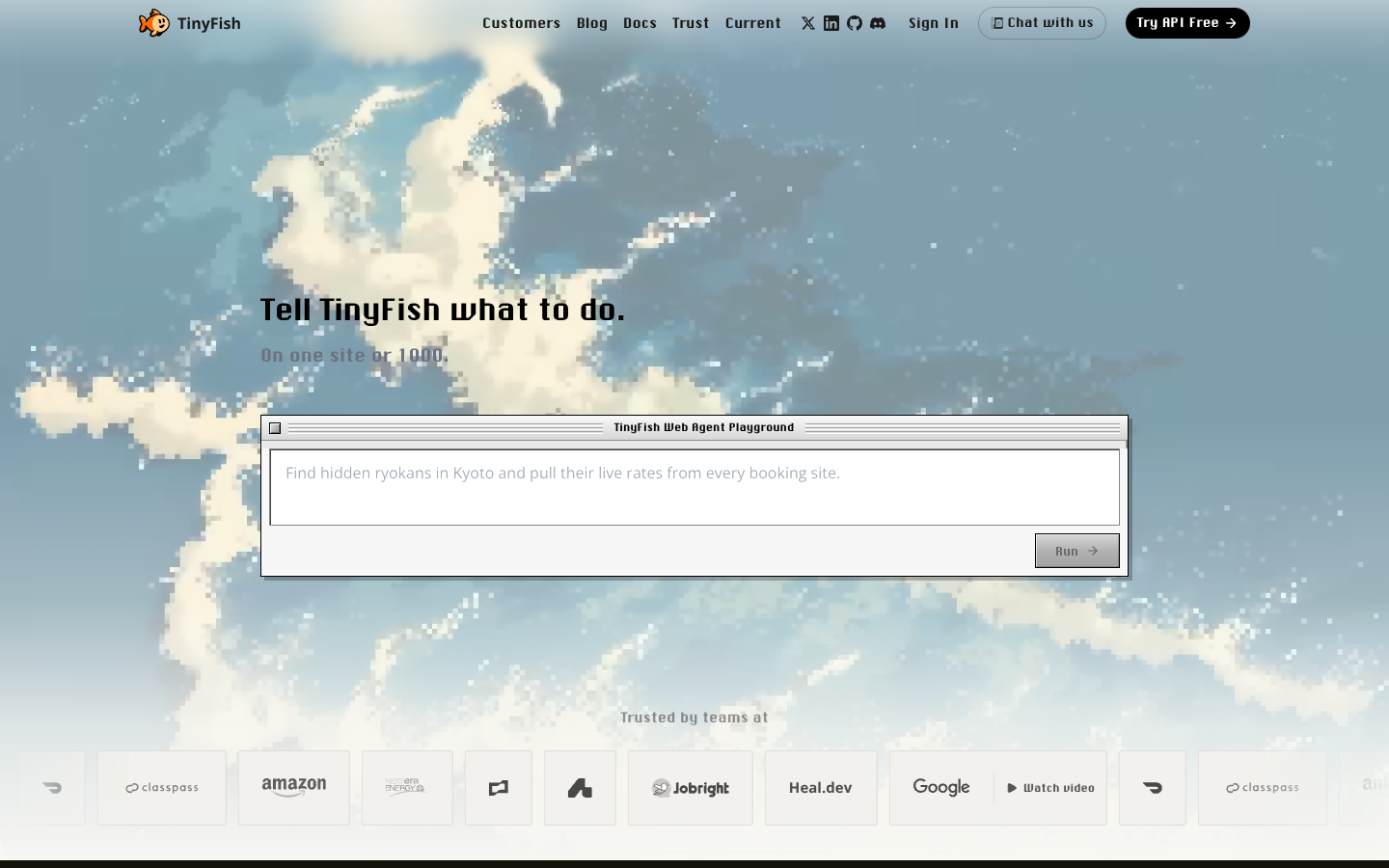
TinyFish provides production-ready web operations infrastructure for AI agents, combining semantic web understanding, serverless browsers, and built-in proxies to automate large-scale web interactions. It lets teams turn complex, unstructured websites into real-time, structured data while minimizing LLM usage and operational overhead.
What to expect from an ideal product
- Uses semantic web understanding to automatically identify and extract key data patterns from messy websites without needing heavy language model processing
- Runs serverless browsers that can navigate and interact with dynamic web pages to grab real-time data as it loads, then converts it into clean JSON or CSV formats
- Built-in proxy rotation handles the technical stuff like avoiding blocks and rate limits so you can pull data from thousands of pages without manual setup
- Converts complex website layouts into structured schemas by recognizing common data patterns like product listings, contact info, and pricing tables
- Provides ready-to-use APIs that transform raw HTML and JavaScript-heavy sites into organized data feeds your applications can actually work with