Phinite AI Reviews — Discover what people think of this product.

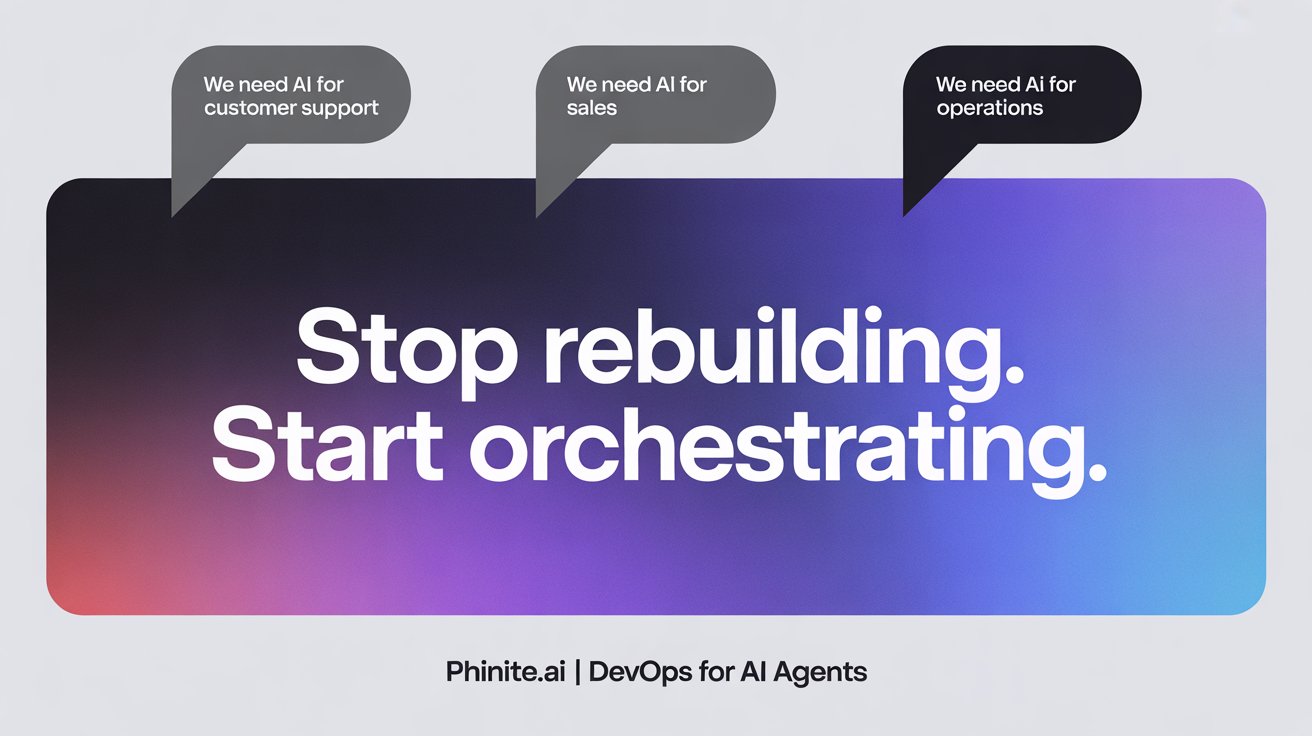
What users think of Phinite AI
Maker
 Swapnil
Supporters


 +2
+2Idea
4.3
Product
4.8
Feedback
0
Roasted
0
More about Phinite AI
THE PROBLEM WE ARE SOLVING
Enterprises and builders are racing to deploy AI agents. The vast majority never make it to production. When you look closely, the failures trace back to three root causes — and none of them are about the AI models themselves.
-
INFRASTRUCTURE FRAGMENTATION Every team rebuilds the same plumbing. Orchestration, security, observability, deployment pipelines — all rebuilt from scratch on every single project. Enormous duplicated effort, no shared foundation.
-
TRADITIONAL DEVOPS WAS NOT BUILT FOR AGENTS Software testing assumes deterministic behavior — run the same test twice, get the same result. AI agents do not work that way. The same input can produce very different execution paths. The entire toolchain teams rely on assumes a kind of predictability that agents simply do not have.
-
AGENTS ARE NOT TREATED AS FIRST-CLASS Enterprises treat agents as disposable scripts. No identity. No version history. No owner. No shared skill library. No composability. When the engineer who built an agent leaves, the knowledge leaves with them. Nothing transfers.
Phinite exists to make agents first-class citizens of the software stack — with the same rigor, reusability, and governance that we long ago gave to code, containers, and data.
THE FOUR CORE PRIMITIVES
Phinite is built around four primitives. Together they form the complete operating model for multi-agent AI.
-
AGENT REGISTRY Identity, discovery, and inventory for every agent in the organization. Every agent gets a first-class ID, an owner, a version, and a place in a searchable system of record — the same way microservices have a service registry, or users have an identity provider.
-
SKILLS & COMPOSABILITY Reusable, versioned skills that agents inherit and compose. Instead of copy-pasting prompts and rebuilding logic on every project, teams build a skill once and reuse it everywhere. Agents chain together, call each other, and compose into larger systems — without scattered, brittle glue code.
-
LIFECYCLE MANAGER Versioning, rollback, and deployment built specifically for stateful agents. Agents are not stateless functions — they carry context, memory, and evolving behavior. The Lifecycle Manager handles deployment from development to production, across any environment, with full version control and one-click rollback when something goes wrong.
-
GOVERNANCE ENGINE Policy, audit, and risk controls across every agent interaction. Every action an agent takes is logged immutably. Role-based access control, policy guardrails, and audit trails are built in — so security and compliance teams can sign off from day one, not as an afterthought.
Four primitives. One platform. Cloud-agnostic.
Tags
Product Categories
Related Tasks
- How to create reusable AI agents with persistent identity and version control
- How to deploy and govern multiple AI agents across production environments at scale
- How to stop rebuilding AI agent infrastructure from scratch across teams?
- How to monitor and evaluate AI agent behavior with comprehensive observability and compliance
Featured Today

tiun
Payments backend for indie hackers
All-in-one: Auth, payments & DB
Single command: MCP, Skills
Built for developers.
Merchant of Record. Better fees.
Join the Microlaunch builder community
Get product updates, weekly standouts, and founder deals.