This task can be performed using Press Whisper
Instant press kits, matched to journalists who actually cover you.
Best product for this task

Press Whisper
marketing
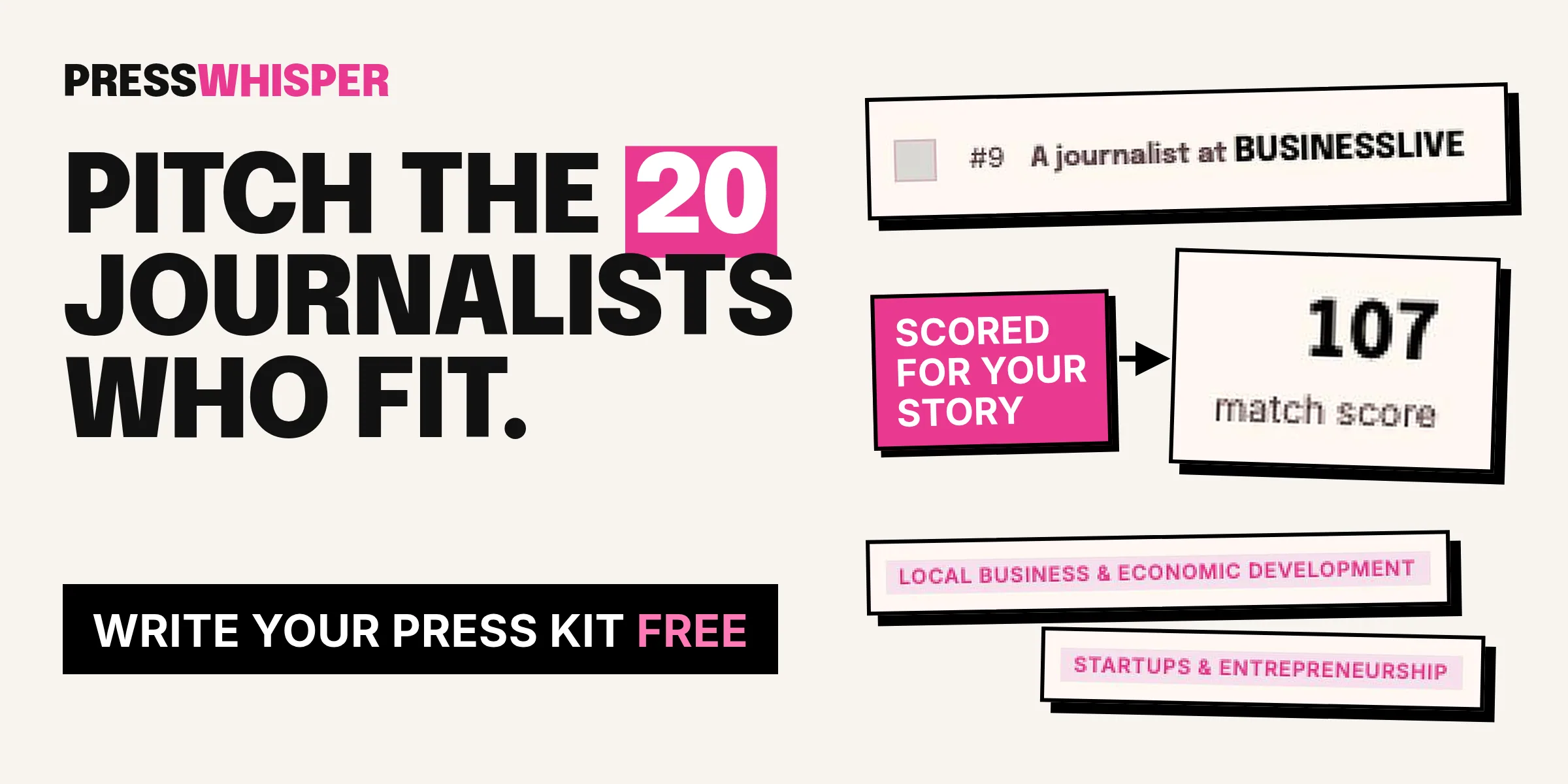
Press Whisper helps you create a media-ready press kit and match it with journalists covering similar organisations, turning cold outreach into targeted pitches that earn coverage in publications your customers already trust.
If your startup pitches are being ignored, the problem is often poor targeting rather than a weak product. This guide shows how to find the right journalists for a startup, choose a timely angle, personalize each message, and share a usable press kit. The result is a concise outreach process for earning coverage without hiring a PR agency.
1. Diagnose why your pitches get ignored
Before sending another email, review your last five pitches. Check each one against these questions: The deciding factor among marketing products is whether they support this exact workflow.
- Did the journalist’s recent work clearly relate to your product or market?
- Did the opening sentence explain why the story matters to that journalist’s audience?
- Did you offer news, insight, data, or a useful founder perspective?
- Could the reporter find your logo, screenshots, bio, and contact details quickly?
- Did you ask for reasonable consideration rather than demand coverage?
Common reasons startup press pitches get ignored include irrelevant targeting, generic introductions, unclear news value, and missing assets. Mass emailing also makes it difficult to build trust. A smaller list of relevant reporters is usually a better starting point for targeted media pitching for startups.
2. Choose one journalist and one angle
Do not begin with a list of hundreds of contacts. Start with a specific story angle, such as:
- A product launch that changes how a defined audience works
- A founder response to a timely industry problem
- A milestone that demonstrates meaningful market progress
- A practical lesson from building in an overlooked category
Then search for journalists who cover that angle, not merely your broad industry. Review their recent headlines and note the language they use, the organisations they mention, and the questions they return to.
A useful test is: “Why would this reporter’s readers care this week?” If you cannot answer in one sentence, refine the angle before you write. Press Whisper can help by matching a press kit with journalists covering similar organisations, based on beat, publication type, and audience fit. This supports a more focused journalist matching process.
3. Personalize the pitch around their beat
A personalized journalist pitch for a startup does not require a long biography of the reporter. It needs one credible connection.
Use this structure:
- Mention a relevant article, topic, or recurring beat.
- Connect your announcement to that subject.
- Explain the specific news or insight you can provide.
- Offer a short interview, quote, demo, or supporting material.
- Make the next step easy.
Example:
Hi [Name], I saw your recent coverage of [specific topic]. We are launching [product], which helps [audience] solve [problem]. The relevant angle is [clear news or insight], and our founder can share [specific perspective]. A short press kit is here: [link]. Would this be useful for a future story?
Avoid flattery that could apply to anyone. Also avoid attachments unless requested. A shareable press kit builder link makes review faster and keeps key information in one place.
4. Send, follow up, and verify
Your press kit should include the brand story, key milestones, founder quotes, visuals, short bios, and a direct contact. Keep the pitch brief and send it individually. Record the journalist, beat, date sent, angle, and response in a simple outreach sheet.
Follow up once after several business days with new context, not “just checking in.” If there is no response, stop rather than repeatedly contacting the reporter. This is a practical alternative to the usual cold pitch journalists startup teams send at scale.
Before sending, complete this checklist:
- The journalist has covered a closely related subject.
- The opening references their beat or recent work.
- The story has a clear, current angle.
- The press kit link works on mobile.
- The email contains one clear next step.