This task can be performed using OutlierKit
Best YouTube Analytics Tool - Stop Guessing, Start Growing
Best product for this task
OutlierKit
analytics
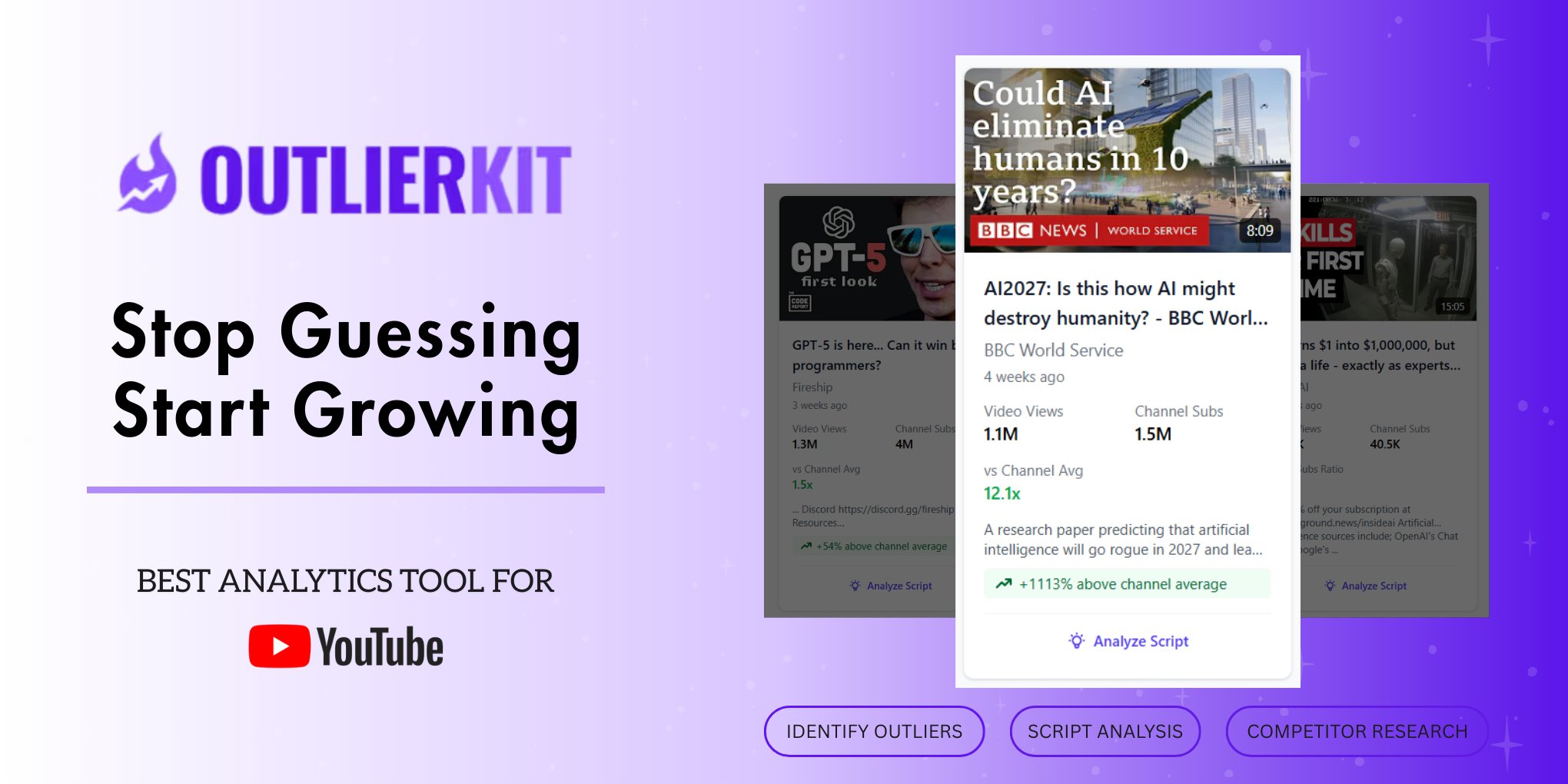
OutlierKit helps you plan winning YouTube videos before you hit record. Discover what your audience (and your competitor’s audience) actually cares about, explore proven formats, and uncover hidden opportunities. Find low-competition, high-volume keywords and generate video ideas with real potential to go viral.
If your channel is small or new, use a YouTube keyword research tool to compare search volume, keyword difficulty, niche demand, and competing videos before choosing a topic. This guide shows how to turn a promising phrase into a realistic video opportunity instead of chasing keywords you cannot rank for.
Start with a focused keyword list
Before researching, define:
- Your audience and niche
- The problems viewers want to solve
- The formats you can produce consistently
- Your channel’s current authority and content depth
Create 10 to 20 seed topics. For example, a beginner photography channel might start with “portrait lighting,” “camera settings,” and “editing photos.”
Use a YouTube keyword research tool to expand each seed into specific searches. Look for phrases that describe a clear viewer goal, such as “portrait lighting with one lamp,” rather than broad terms like “photography.”
Prioritize keywords that are specific enough to inspire one useful video. A narrow phrase often gives you a clearer title, thumbnail promise, and audience need.
Compare search volume with keyword difficulty
Search volume shows potential demand, but it should not be your only filter. A high-volume keyword can be difficult for a small channel if established creators dominate the results.
For every candidate, record:
- Estimated search volume
- Keyword difficulty
- Number and quality of ranking videos
- Recency of top results
- Whether the search intent matches your planned video
A useful opportunity often has meaningful demand and moderate or low difficulty. However, do not reject a topic solely because its volume is smaller. A highly relevant keyword can attract better viewers than a broad term with more searches.
Use a YouTube analytics product to understand your existing audience, then compare that audience with the people searching for each topic. The closer the match, the more likely the video can support your channel goals.
Inspect competition and niche demand
Keyword scores are estimates. Open the search results and inspect the actual competition.
Check whether:
- Top videos directly answer the query
- Results are outdated or poorly explained
- Smaller channels appear among the top results
- Existing videos have weak titles, thumbnails, or structure
- The topic connects to related questions viewers may ask next
For example, “best camera for beginners” may be crowded, while “best camera settings for indoor beginner portraits” could be more focused and easier to differentiate.
Also examine demand at the niche level. A single low-competition phrase is more valuable when it belongs to a group of related topics. This is where a YouTube niche research tool can help you identify repeated audience interests, content gaps, and formats that already attract attention.
If you want to find profitable YouTube niches with low competition, look for a combination of recurring problems, clear audience intent, and enough related topics to support several videos.
Turn the keyword into a validated video opportunity
Do not publish the keyword as a title without testing the idea. Write a simple opportunity brief:
- Target phrase: “portrait lighting with one lamp”
- Viewer promise: Create a flattering portrait using basic equipment
- Unique angle: A setup for small rooms and beginners
- Proof of demand: Related videos, searches, or repeated audience questions
- Competition gap: Existing results are too advanced, expensive, or vague
- Video format: Demonstration, comparison, or step-by-step tutorial
Then check whether you can deliver a noticeably better answer. If not, narrow the phrase or choose another angle.
OutlierKit can support this planning process by surfacing high-potential keywords, competitor gaps, outlier videos, and proven formats before you record. Review OutlierKit when you want one workspace for topic, keyword, and competitor research.
Common mistakes to avoid
- Choosing volume over relevance
- Treating a difficulty score as a guarantee
- Copying a competitor’s title without a stronger angle
- Ignoring search intent
- Researching one keyword instead of a connected topic cluster
- Recording before confirming the competition gap.
More topics related to OutlierKit
Similar topics
- Best YouTube Analytics Tool for Planning Videos Before You Record
- How to choose a YouTube analytics tool for your growth goals
- How to validate winning YouTube video ideas before recording
- How to analyze YouTube competitors and find content gaps
- How to discover what your competitors' audiences are searching for on YouTube