This task can be performed using Hackwithus
Discover community-built products, support makers, grow to $1K/mo.
Best product for this task
Hackwithus
startup-builders
Hackwithus is a launch-focused builder challenge designed to help indie hackers and small teams reach their first $1K/month in revenue.
What to expect from an ideal product
A revenue hackathon for startups can turn an unfinished idea into a focused path toward customers, but not every challenge fits every builder. Choose one by checking its milestones, audience, rewards, and proof of progress. This guide helps you compare options and select a challenge that can support your first $1,000 in monthly recurring revenue.
1. Define the result before choosing a challenge
Start with a specific outcome. “Launch a product” is too broad. A useful target might be:
- Get three paying customers
- Validate one pricing model
- Reach $100 in monthly revenue
- Build a repeatable path toward $1K monthly recurring revenue
Write down your current position and deadline. For example:
I have a working prototype, no paying customers, and six weeks to validate whether small teams will pay for it.
This prevents you from choosing an online builder challenge with prizes simply because the prize sounds attractive. Your main selection criterion should be whether the structure helps you reach a real customer.
Also identify your available time, technical ability, and preferred working style. A solo builder may need accountability and templates, while a small team may value flexible milestones and teammate matching.
2. Compare the challenge structure
Review each challenge against the same checklist:
- Does it require a working product or only an idea?
- Are weekly milestones clearly defined?
- Is customer feedback part of the process?
- Can you enter as a solo founder or small team?
- Are prizes connected to verified participation or outcomes?
- Is there a community for questions and accountability?
A startup hackathon with cash prizes can create useful urgency, but a prize alone does not create demand. Look for a challenge that makes you ship, show the product, collect feedback, and improve it.
For a broader comparison, review hackathons for startup builders alongside startup-builder challenges. Keep a simple scorecard from one to five for structure, customer access, time fit, and technical requirements.
3. Match the format to your revenue goal
Different formats support different goals:
- An idea-focused contest suits early validation.
- A build-and-launch challenge suits a prototype that needs users.
- An indie hacker challenge to make money suits a product that can be sold quickly.
- A first 1000 MRR challenge suits builders ready to test pricing, retention, and acquisition.
If your goal is to turn a side project into SaaS revenue, prioritize a time-boxed challenge with a launch deadline and visible progress checks. Avoid formats that reward polish while ignoring customer conversations.
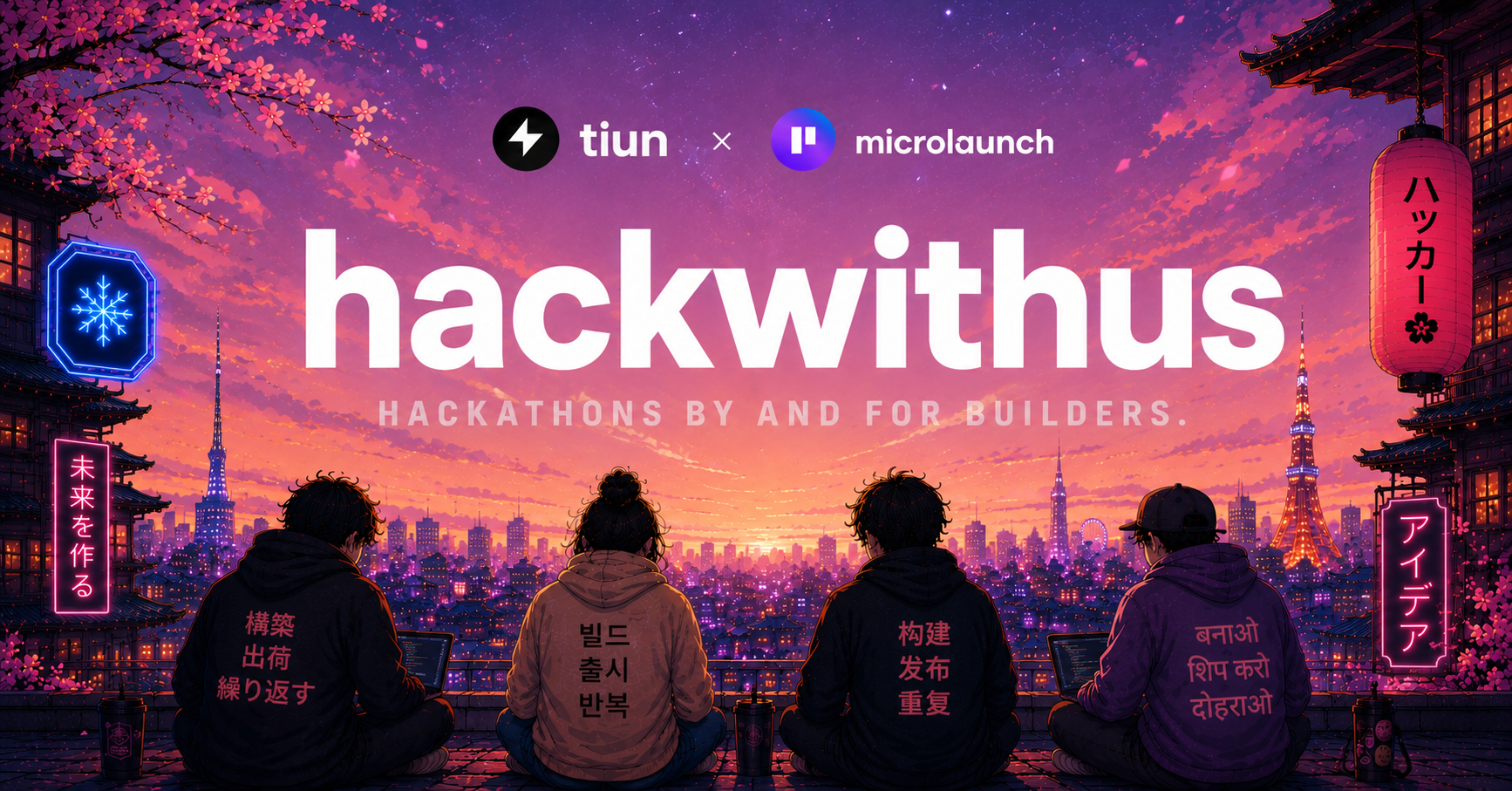
Hackwithus is designed for this middle stage. Its tiun × Microlaunch hackathon gives indie hackers and small teams a path from concept to launch, with SDK integration in approximately five lines, community feedback, starter resources, and a growing prize pool of up to $10K. Treat those features as support for execution, not as a substitute for customer validation. You can compare it with other revenue-focused challenge products.
4. Verify your choice before committing
Before registering, complete this five-minute test:
- [ ] State your target customer in one sentence.
- [ ] Describe the paid problem you will test.
- [ ] Confirm the challenge deadline fits your schedule.
- [ ] Identify the milestone that proves customer interest.
- [ ] Check how submissions and prizes are verified.
- [ ] Decide what evidence will make you continue, change direction, or stop.
Common mistakes include choosing a challenge only for its cash prize, building features before speaking with users, and setting a revenue target without a customer-count plan. For example, $1,000 MRR could mean ten customers at $100 or 100 customers at $10. Those paths require different products and outreach.
If the structure matches your stage, join Hackwithus and review the challenge path. After registration, record your baseline: product status, conversations started, paying customers, and monthly revenue. At the end, compare those numbers with your starting point. A challenge is worth continuing when it produces clearer customer evidence, not merely a finished demo.
More topics related to Hackwithus
Similar topics
- How to launch a community-built product and reach $1K in monthly revenue?
- How to onboard early supporters for an indie product launch?
- Product Launch Challenge Templates for Small Teams and Solo Founders
- Hackwithus Alternatives for Indie Hackers Targeting $1K Monthly Revenue
- How to use hackwithus challenge discovery and registration
- How to choose indie hacker and micro-SaaS launch challenges