This task can be performed using Hackwithus
Discover community-built products, support makers, grow to $1K/mo.
Best product for this task
Hackwithus
startup-builders
Hackwithus is a launch-focused builder challenge designed to help indie hackers and small teams reach their first $1K/month in revenue.
What to expect from an ideal product
Choosing the right indie hacker challenge can determine whether your product reaches users or remains an unfinished side project. Compare each challenge by its audience, milestones, support, technical requirements, and path to revenue. Use the steps below to choose a program that matches your product and availability.
1. Define the launch outcome first
Before comparing programs, write down what success means for this launch.
Use a short checklist:
- [ ] Ship a usable product by a specific date
- [ ] Validate demand with real users
- [ ] Reach a first paying customer
- [ ] Work toward $1,000 per month
- [ ] Find teammates or accountability
- [ ] Compete for prizes or visibility
For example, a developer with a working prototype may need a from idea to first customer challenge, while a nontechnical founder may need a no-code founder launch program with stronger peer support.
Also record your constraints:
- Hours available each week
- Current product stage
- Technical skills
- Preferred team size
- Revenue or traction target
This prevents you from choosing a demanding build and launch SaaS challenge when you only have time for a short validation sprint.
2. Compare the challenge structure
A useful micro SaaS challenge should make the next action obvious. Review the rules and ask:
- Are milestones time-boxed?
- Does the program require a real product submission?
- Are users, feedback, or revenue part of the evaluation?
- Is there a community for questions and accountability?
- Are templates or starter resources included?
- Can a solo founder or small team participate?
A traditional hackathon for indie hackers may prioritize rapid building and judging. A revenue-focused challenge may give more attention to onboarding, customer feedback, and monetization. Neither is automatically better. Choose based on your immediate bottleneck.
If your product is already close to launch, prioritize a program with submission guidance and user feedback. If you are still exploring, choose a developer challenge to build a startup that allows focused validation before extensive development.
3. Check technical and commercial fit
Do not join a challenge solely because the prize sounds attractive. Confirm that the required work supports your product.
Create a simple scorecard from one to five:
| Criterion | Score | |---|---:| | Fits my product stage | | | Fits my weekly availability | | | Supports my target users | | | Includes useful feedback | | | Helps with launch or revenue | | | Technical requirements are realistic | |
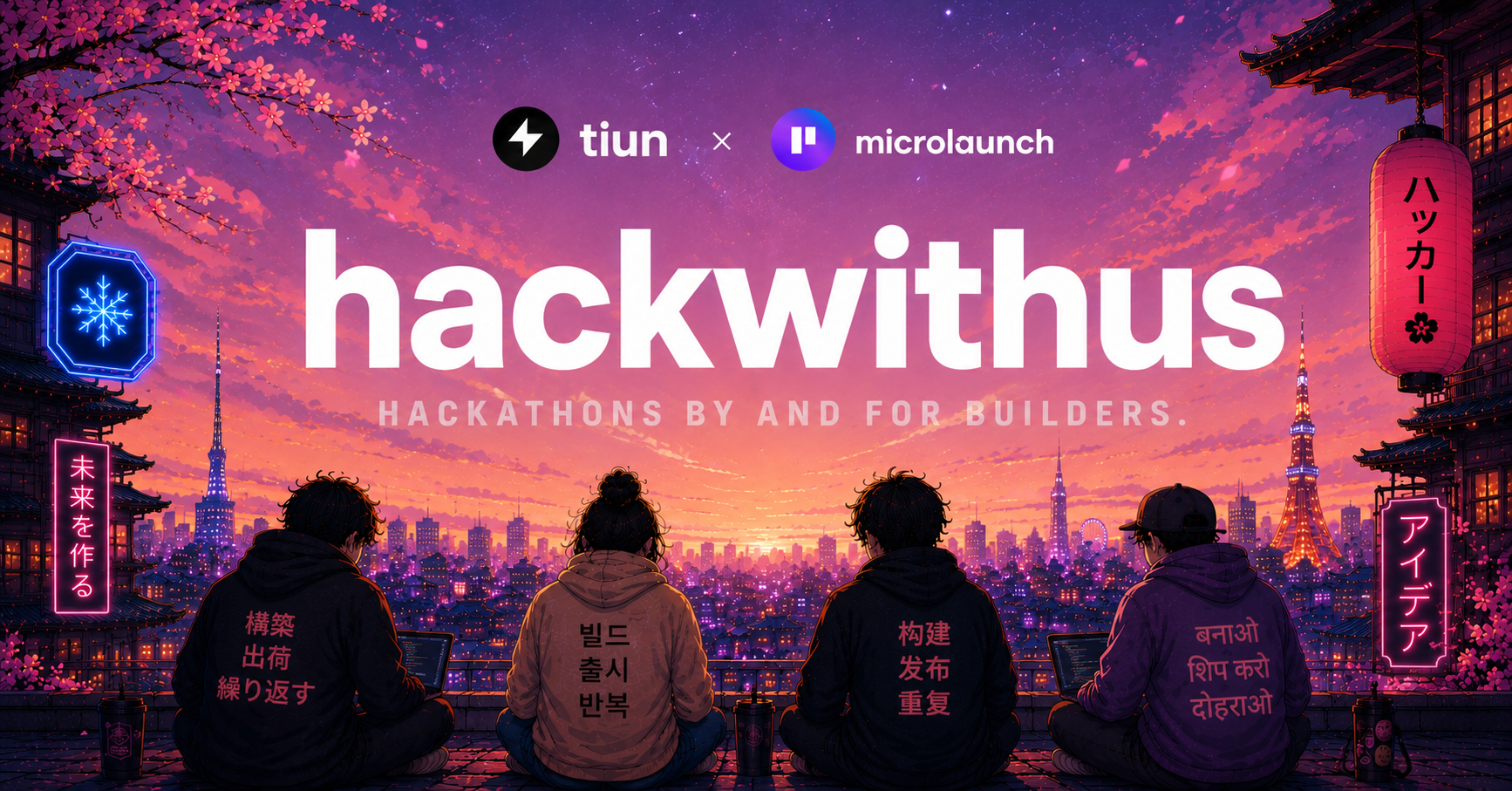
For example, Hackwithus is a launch-focused builder challenge for indie hackers and small teams working toward their first $1,000 per month. Through the tiun × Microlaunch hackathon, participants ship a product, integrate the tiun SDK in approximately five lines, and compete for a prize pool that can grow to $10,000.
Review indie builder challenge products when you want to compare programs centered on independent makers. Consider startup-builders products when your main need is broader startup-building support rather than a narrowly timed launch.
4. Verify the commitment before joining
Read the submission rules, schedule, integration requirements, and judging criteria. Look for hidden workload, such as mandatory demos, complex reporting, or unsuitable technology requirements.
Avoid these common mistakes:
- Choosing a challenge without a clear finish line
- Building features that do not support the launch goal
- Ignoring the time required for marketing and support
- Assuming community attention equals paying demand
- Joining several challenges and finishing none
A good product launch challenge for makers should narrow your focus, not add more unfinished tasks. If you need a clearer comparison, review Microlaunch contest products and note which programs match your stage and desired outcome.
5. Make the decision and define your first checkpoint
Choose the highest-scoring challenge, then set one measurable checkpoint for the first week: a validated problem, a working core flow, or a submitted product page.
More topics related to Hackwithus
Similar topics
- How to launch a community-built product and reach $1K in monthly revenue?
- How to onboard early supporters for an indie product launch?
- Product Launch Challenge Templates for Small Teams and Solo Founders
- Hackwithus Alternatives for Indie Hackers Targeting $1K Monthly Revenue
- How to use hackwithus challenge discovery and registration