This task can be performed using CreatorPilot AI
Turn one idea into 30 days of growth-focused content
Best product for this task

CreatorPilot AI
marketing
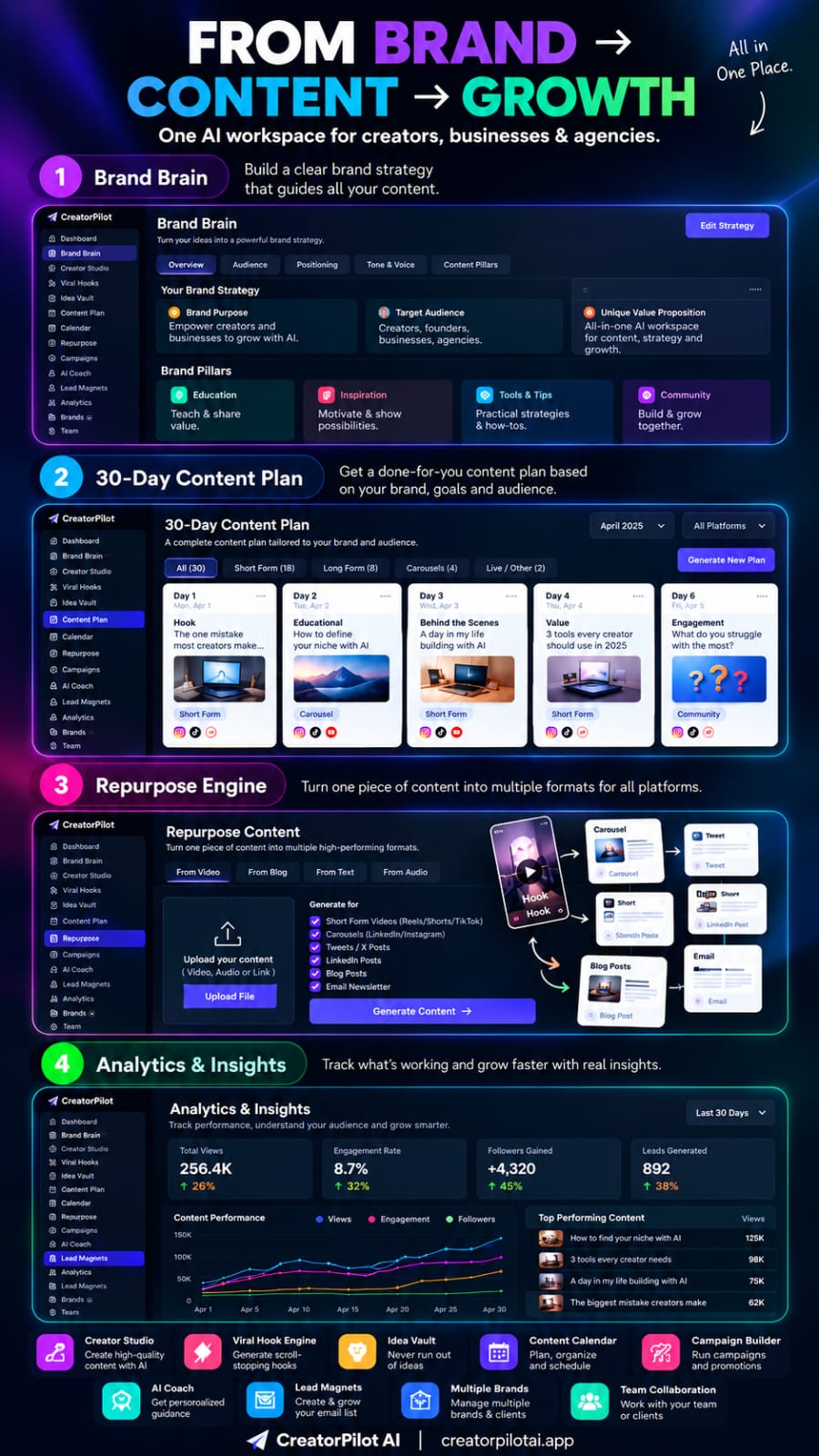
CreatorPilot AI turns one brand idea into a full month of tailored content, campaigns, and lead magnets, combining a Brand Brain, content calendar, repurposing engine, and analytics into a single creator-focused workflow.
If AI content sounds generic or unlike your business, use this guide to define your voice, store it in a Brand Brain, generate one real campaign, and verify each draft before publishing. The result is a repeatable way to create content that sounds like you across channels.
1. Turn your voice into usable rules
Before choosing an AI content generator, collect five examples of content that already sounds right. Include a social post, email, sales page section, or script that reflects how you naturally communicate. The deciding factor among marketing products is whether they support this exact workflow.
Then write a short voice profile covering:
- Audience: Who are you speaking to?
- Tone: Friendly, direct, playful, calm, or authoritative?
- Sentence style: Short and punchy, or detailed and educational?
- Favorite language: Words and phrases you use often.
- Avoid list: Hype, jargon, clichés, or claims you would never make.
- Business goal: Educate, build trust, generate leads, or sell?
For example, a career coach might define the voice as: “Warm, practical, and honest. Use short sentences. Explain complex ideas with everyday examples. Avoid corporate jargon and exaggerated promises.”
This becomes your brand voice checklist for AI content. It also gives an AI content generator trained on brand guidelines clear instructions instead of relying on vague prompts.
2. Store the rules in one Brand Brain
Copy your voice profile, positioning, offer details, audience, and approved phrases into a centralized brand memory. A brand brain AI content tool can then apply those instructions repeatedly instead of making you restate them for every post.
CreatorPilot AI uses a Brand Brain to store these details and guide outputs from its AI Content Engine. This is useful when you need brand brain products that keep messaging aligned across formats.
Add examples of both good and bad writing. Explain why each example works or fails. Also specify channel differences. Your LinkedIn posts may be more detailed than your Instagram captions, but both should still sound like the same business.
3. Generate one idea in several formats
Choose one real idea and test it. For example:
“New freelancers lose leads when their service description focuses on tasks instead of outcomes.”
Ask your brand voice AI content generator to create:
- A short social post
- A 30-second video script
- An email introduction
- A call to action for a checklist
Use a prompt such as:
Create four versions of this idea for my audience. Follow the stored Brand Brain. Keep the tone practical and warm. Avoid hype, jargon, and unsupported claims. Show the voice choices you followed.
This is where an AI content generator that remembers brand voice can reduce inconsistent wording across channels. CreatorPilot AI can also organize the idea into a broader content workflow, but review the first outputs closely before producing a full month.
4. Run a voice and accuracy check
Do not approve content because it sounds polished. Compare every draft against your checklist:
- Does it sound like the brand, not a generic expert?
- Does it address the intended audience?
- Are the tone and sentence length appropriate?
- Does it use approved language?
- Does it avoid banned words and exaggerated promises?
- Is the call to action clear?
- Are facts, examples, and claims accurate?
Read the drafts aloud. If you would not say a sentence in a conversation with a customer, revise it. Replace vague lines such as “unlock your full potential” with specific language such as “write a service page that explains the result clients can expect.”
A second AI review can identify mismatches, but treat it as an evaluated signal, not proof that conversions will improve. Monitor replies, clicks, leads, and other real performance data after publishing.
Common mistakes to avoid
The most common error is giving AI only adjectives, such as “professional and friendly.” Add examples, exclusions, audience context, and goals.