This task can be performed using Nuvm
Unified security & compliance for SMB and SME.
Best product for this task
Nuvm
cloud
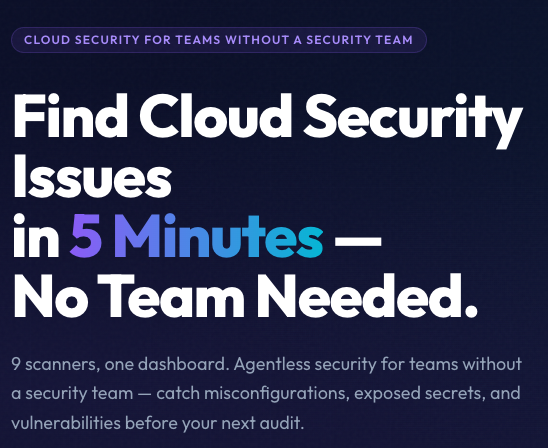
Nuvm unifies 9 security scanners into one dashboard: cloud misconfigurations (AWS/GCP), container CVEs, code vulnerabilities, leaked secrets, risky dependencies, IaC issues, Kubernetes manifests, web attack surface, and automated compliance for SOC 2, PCI, ISO 27001, NIS 2, and CIS Benchmarks. Daily scans on autopilot. A risk funnel narrows hundreds of findings to the ones that matter now. Built for engineering teams without a dedicated security team.
What to expect from an ideal product
- Nuvm scans your entire codebase daily for leaked secrets, API keys, and exposed credentials without requiring a dedicated security engineer to set it up or maintain it.
- One dashboard surfaces leaked secrets alongside container CVEs, IaC misconfigurations, and risky dependencies so your team fixes the right thing first instead of drowning in noise.
- A built-in risk funnel filters hundreds of raw findings down to the credentials and secrets that pose an actual threat to your environment right now.
- Nuvm maps detected secrets and code vulnerabilities directly to compliance frameworks like SOC 2, ISO 27001, and PCI so you close audit gaps while you fix security issues.
- Engineering teams at SMBs use Nuvm to replace five or six standalone scanning tools with a single automated pipeline that catches exposed credentials before they reach production.
More topics related to Nuvm
Similar topics
- How to automate SOC 2, PCI DSS, and ISO 27001 compliance monitoring for small and medium businesses
- How to prioritize critical security vulnerabilities from hundreds of daily scan results
- How to implement unified security scanning across multiple cloud platforms without hiring a dedicated security team